
Stanford Education: Will Artificial Intelligence Transform Career Prospects?
Stanford graduates share their views on how artificial intelligence is reshaping career opportunities and educational value. Discover their insights on AI's impact.
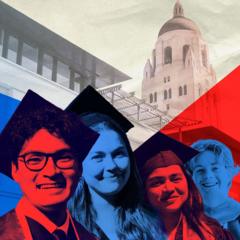
Stanford Graduates Assess Artificial Intelligence's Role in Modern Careers
The relationship between artificial intelligence career impact and professional development has become a central concern for recent Stanford University graduates navigating today's job market. In recent discussions, alumni from the prestigious institution opened up about their perspectives on how machine learning and AI technologies are fundamentally reshaping the landscape of employment opportunities and long-term career trajectories.
Understanding the Graduate Perspective on AI Integration
Stanford's accomplished alumni represent some of the brightest minds entering the workforce, making their insights particularly valuable regarding artificial intelligence's influence on career prospects. These graduates, who benefited from world-class education at one of Silicon Valley's most influential institutions, are now confronting a workforce increasingly defined by technological innovation and algorithmic advancement.
The conversations reveal a complex picture: while many recognize AI as a transformative force with tremendous potential, others express measured concerns about workplace disruption and skill obsolescence. This nuanced perspective reflects the reality that artificial intelligence's impact on careers remains multifaceted, with both significant opportunities and genuine challenges ahead.
Opportunities Created by Artificial Intelligence
Several Stanford graduates highlighted how artificial intelligence is opening entirely new professional pathways that didn't exist a decade ago. Positions in machine learning engineering, AI ethics, data science, and algorithmic research represent expanding fields where demand for talent continues to outpace supply. These opportunities often command competitive salaries and offer intellectually stimulating work that appeals to analytically-minded professionals.
Beyond specialized AI roles, graduates noted that understanding machine learning principles provides a competitive advantage across traditional industries. Finance, healthcare, logistics, and creative fields increasingly seek professionals who can leverage artificial intelligence tools effectively. This broader applicability means that even those not pursuing AI-focused careers benefit from fundamental knowledge in this domain.
Challenges and Workforce Disruption Concerns
However, not all perspectives were optimistic. Some Stanford alumni expressed legitimate concerns about artificial intelligence's potential to automate routine tasks and administrative functions. They worry that certain entry-level positions might disappear or transform dramatically as companies implement AI solutions. This concern is particularly acute in fields like legal research, financial analysis, and customer service, where automation capabilities are advancing rapidly.
The graduates also discussed how artificial intelligence might create a bifurcated job market: highly rewarding positions for those with specialized AI knowledge versus declining opportunities for workers without technical expertise. This potential inequity prompted many to advocate for broader AI literacy initiatives throughout educational systems worldwide.
The Value of Stanford Education in an AI-Driven World
When asked whether their Stanford degrees maintained value amid rapid technological change, most graduates affirmed that foundational education from prestigious institutions remains invaluable. They credited their training in critical thinking, problem-solving, and mathematical rigor as essential capabilities that complement rather than compete with artificial intelligence. A Stanford education teaches students not just what to think, but how to think—skills that remain uniquely human despite algorithmic advancement.
Many emphasized that their educational experience provided exposure to emerging technologies and industry leaders actively shaping AI development. This proximity to innovation hubs and entrepreneurial ecosystems gave Stanford graduates unique positioning to understand and anticipate technological shifts.
Preparing for an Uncertain Future
The Stanford alumni discussed strategies for maintaining career relevance as artificial intelligence continues evolving. Continuous learning emerged as a consistent theme, with graduates advocating for lifelong education and upskilling. Many invested time learning AI fundamentals, even if not pursuing AI-specific careers, recognizing that basic literacy in machine learning concepts has become essential professional knowledge.
Several emphasized that soft skills—leadership, communication, creativity, and emotional intelligence—become increasingly valuable as artificial intelligence handles routine analytical tasks. These distinctly human capacities represent where professionals can differentiate themselves and contribute unique value.
Conclusion: Navigating AI's Impact on Professional Development
The Stanford graduates' collective assessment suggests that artificial intelligence presents neither purely an opportunity nor purely a threat, but rather a transformative force requiring thoughtful adaptation. Their Stanford education, combined with awareness of technological trends, positions them well to navigate these changes successfully. For the broader workforce, the message is clear: understanding artificial intelligence and developing complementary human skills will determine success in coming decades.


