Far-Right Activists Rally at Portsmouth Port After Migrant Boat Intercept
Hundreds of far-right protesters gathered at Portsmouth following the interception of a small vessel carrying 140 asylum seekers. Influencers organized demonstrations against migrant arrivals.
Large-Scale Demonstration Emerges at Portsmouth Following Maritime Intercept
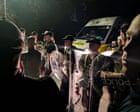
A significant gathering of far-right protesters has taken place in Portsmouth after authorities intercepted a vessel carrying approximately 140 asylum seekers approaching the English coast. The far-right protesters' mobilization represents an unprecedented response to migrant arrivals at this particular maritime location, drawing considerable attention from both media and government officials. The interception triggered an extensive emergency response involving helicopter support, aerial reconnaissance, and multiple lifeboat units deployed to manage the situation.
Details of the Maritime Incident
The vessel's arrival marked a notable development in asylum seeker arrivals, as this constituted the largest group of migrants brought to Portsmouth via small boat in recent operations. Authorities successfully brought all occupants safely to shore at the coastal port. The far-right protesters' decision to gather at Portsmouth indicated growing tensions surrounding immigration policy and border management in the United Kingdom.
The Home Office has implemented protocols to transport the intercepted passengers to Manston Processing Centre, located in the vicinity of Ramsgate, Kent. This established facility serves as the primary processing hub for asylum seekers who arrive via maritime routes. Officials coordinated the transfer to ensure proper documentation, health screening, and initial intake procedures for all individuals aboard the intercepted vessel.
Online Organization and Influencer Involvement
Social media platforms played a crucial role in mobilizing the far-right protesters who descended upon Portsmouth. Content creators used livestreaming capabilities to coordinate attendance and encourage additional supporters to travel to the port. Online messaging specifically targeted men and called for individuals to assemble at locations where transport coaches carrying asylum seekers were stationed, with the stated objective of preventing vehicles from departing the area.
This digital coordination represents a shift in protest organization tactics, leveraging influencer networks and real-time broadcasting to generate rapid response demonstrations. The ability to communicate instantly through multiple platforms enabled far-right activists to organize what became one of the most significant anti-migrant gatherings at a UK port facility.
First Instance of Coordinated Anti-Migrant Mobilization
The assembly of far-right protesters at Portsmouth appeared to be the first organized attempt to block the processing and transit of newly arrived asylum seekers on this scale. Previous migrant arrivals at other coastal locations had not generated comparable counter-demonstrations, making this event particularly significant for authorities monitoring extremist activity and public order management.
The convergence of large numbers of far-right activists at a single location required substantial police presence and coordination between multiple emergency services. Officers implemented crowd management strategies while maintaining public safety and protecting asylum seekers undergoing processing procedures.
Government Response and Processing Procedures
The Home Office maintained established protocols despite the external pressure from far-right protesters. Standard procedures for asylum seeker reception, registration, and initial assessment continued despite demonstrations occurring outside processing facilities. Authorities prioritized the welfare and security of all individuals aboard the intercepted vessel.
Manston Processing Centre, the designated destination for the Portsmouth arrivals, operates as the central facility for managing maritime asylum claims in southeastern England. The centre conducts initial interviews, medical screenings, and documentation review for all newly arrived asylum seekers before subsequent placement decisions are made.
Emergency Response Coordination
The maritime intercept itself necessitated substantial emergency response resources. The deployment of helicopter units, fixed-wing aircraft, and multiple lifeboat crews underscored the complexity of managing small boat operations in busy maritime zones. These resources ensured the safety of all individuals aboard the vessel and facilitated their successful transfer to Portsmouth.
Implications for Future Arrivals
The incident at Portsmouth, marked by both the large-scale interception and the far-right protesters' demonstration, signals potential changes in how future migrant arrivals may be received. Increased activism and organized opposition to asylum processing could impact operational procedures and security arrangements at coastal reception points.