Dover Vigilantes Warn of Return Unless Police Action Intensifies
Far-right linked group threatens more Dover blockades amid police inaction. Campaigners demand stronger police response to prevent future road disruptions at the port.
Dover Vigilantes Pose Renewed Disruption Threat
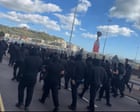
Activists and political figures have expressed serious concerns that masked demonstrators could launch additional disruptive actions at Dover unless law enforcement significantly increases its operational response. The Dover vigilantes, who previously coordinated a major roadway blockade at the port, represent an ongoing challenge to public order that requires immediate attention from authorities.
A coordinated group of black-clad protesters successfully obstructed traffic at one of Britain's busiest transport hubs, raising alarm bells among local officials and community leaders. The incident highlighted vulnerabilities in how authorities manage large-scale protest movements, particularly those organized by groups with ideological underpinnings.
Patriot Platform's Anti-Immigration Agenda
The Patriot Platform has assumed responsibility for orchestrating the Dover demonstration, positioning itself as a movement driven by intense patriotic sentiment and opposition to immigration policies. The organization has demonstrated clear connections to far-right ideological circles, though it presents itself publicly through nationalist rhetoric emphasizing cultural preservation and national interests.
The group's ability to mobilize supporters on a significant scale underscores what critics view as concerning gaps in police surveillance and preventative measures. According to analysts and campaign organizations tracking extremist movements, the current law enforcement approach has proven insufficient in deterring or disrupting such coordinated actions before they escalate.
Campaigners Call for Enhanced Police Response
Hope Not Hate, a prominent civil rights organization, has directly attributed the Patriot Platform's operational success to police inaction and insufficient intelligence gathering. The organization's leadership argues that demonstrating inadequate consequences for large-scale disruption merely encourages similar future mobilization attempts by extremist groups.
Political representatives from across the region have voiced alarm, warning constituents that without substantive changes to policing strategy, Dover residents and businesses face repeated economic disruption and safety concerns. The combination of organized extremist action and perceived police hesitation has created friction between community leaders and law enforcement agencies.
The Broader Context of Roadway Blockades
The Dover blockade represents part of a troubling pattern where activist groups employ traffic obstruction as a pressure tactic to generate media attention and demonstrate organizational capacity. Unlike spontaneous protests, the coordinated nature of the Dover vigilantes' action suggests pre-planning, group communication infrastructure, and deliberate targeting of economic chokepoints.
The port facility serves as a critical commercial gateway, making it particularly vulnerable to disruption and symbolically significant for groups seeking to amplify their messaging. Blocking access to Dover sends powerful signals to both government officials and the general public, elevating the group's profile beyond what traditional protest methods might achieve.
Police Strategy and Prevention Concerns
The question of why police failed to prevent the blockade or disperse participants more rapidly remains contentious. Some observers suggest intelligence failures, while others point to operational constraints, officer availability, or unclear protocols for managing mass demonstrations by organized groups.
Moving forward, security analysts recommend that police forces develop more sophisticated approaches to identifying and monitoring extremist group communications, particularly through digital channels where such organizations coordinate mobilization efforts. Early intervention before demonstrations materialize offers greater effectiveness than reactive responses after roads are already blockaded and economic damage accumulates.
Calls for Systemic Solutions
Beyond immediate policing tactics, campaigners emphasize that addressing the underlying grievances and narratives that fuel such movements requires broader governmental strategy. However, law enforcement agencies maintain primary responsibility for preventing public disorder and protecting critical infrastructure from deliberate disruption.
The situation at Dover exemplifies the challenge facing modern democratic societies in balancing civil liberties with public safety requirements. Groups like Patriot Platform operate within legal gray areas, employing coordinated action that tests the boundaries of permissible protest while causing tangible disruption to ordinary citizens and commercial operations.
Without decisive police action and demonstrated consequences for organizers of such blockades, the likelihood of recurrence remains high. The Dover vigilantes' warning should be understood as a credible threat requiring urgent strategic response from law enforcement authorities to protect public order and prevent normalized disruption of critical economic infrastructure.