
AI Automation Drives Australian Dock Workers to Demand 28-Hour Work Week
Australian port workers call for reduced hours amid AI testing at docks. Union warns automation threatens jobs as artificial intelligence expands across maritime facilities.
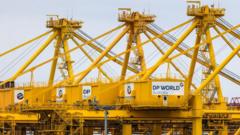
Dock Workers Face Automation Pressure Amid AI Expansion
Australian dock workers automation AI concerns have reached a critical point as maritime unions mobilize to protect employment security. Workers across major ports are calling for a significant reduction in working hours, specifically requesting a 28-hour work week, as artificial intelligence technologies continue to be tested and deployed throughout port operations. The union representing these workers argues that port employees find themselves directly vulnerable to technological displacement.
Union Warns of Automation Threats in Maritime Sector
According to union representatives, dock workers are positioned squarely "in the crosshairs" of advancing automation systems. The implementation of AI-powered machinery and automated cargo handling systems raises serious questions about the future workforce composition at Australian ports. Union leadership emphasizes that without protective measures and restructured working arrangements, the transition to automated operations could devastate employment opportunities for thousands of maritime workers.
Testing Phase Reveals Automation Potential
Currently, artificial intelligence systems are undergoing testing phases across multiple port facilities in Australia. These experimental programs focus on streamlining operations, reducing handling times, and minimizing human oversight requirements. While port operators champion these technological advancements as efficiency improvements, workers express legitimate concerns about their long-term job security and career viability within the industry.
28-Hour Work Week Proposal as Mitigation Strategy
The union's proposal for a reduced work week represents a strategic response to anticipated automation displacement. By advocating for 28-hour weeks instead of traditional full-time schedules, union leaders suggest that available work can be distributed across a larger workforce, potentially preserving employment opportunities even as automation increases operational capacity. This approach reflects international labor movements grappling with similar technological transitions.
Economic Implications of Port Automation
The broader economic implications of dock workers automation AI extend beyond individual employment concerns. Australia's ports represent critical infrastructure for the nation's export economy, handling significant volumes of agricultural products, minerals, and manufactured goods. Any disruption to port labor stability could have cascading effects throughout supply chains and international trade relationships.
Broader Context of Technological Workplace Disruption
The Australian dock workers' situation mirrors challenges facing workers globally as artificial intelligence becomes increasingly integrated into industrial operations. Port facilities represent particularly visible examples of automation pressure because the changes occur in concentrated geographic areas with established workforce communities. Unlike dispersed industries where job losses might go unnoticed, port closures or significant workforce reductions generate immediate political and social attention.
International Labor Movement Response
Maritime unions internationally have begun coordinating responses to automation pressures. Australian dock workers draw inspiration and strategic insights from counterparts in Europe and North America who have negotiated various protections as ports modernized. These international conversations help establish precedents for how automation agreements might function while balancing operational efficiency with employment preservation.
Government and Industry Response
Government authorities and port operators remain largely non-committal regarding the 28-hour work week proposal. Officials acknowledge technological advancement as inevitable while suggesting that market forces and efficiency improvements ultimately determine employment levels. However, political pressure from affected communities may influence policy discussions, particularly in regions where port operations represent significant economic contributions.
Negotiation Pathways Forward
Union representatives indicate willingness to engage in comprehensive negotiations addressing automation implementation timelines, workforce transition support, and adjusted compensation structures. The 28-hour work week represents an opening negotiating position rather than an inflexible demand. Actual settlements may involve combinations of reduced hours, enhanced wages, retraining programs, and job protection guarantees.
Future of Port Work in the AI Era
Regardless of immediate negotiation outcomes, Australian ports will almost certainly incorporate greater automation in coming years. The question facing dock workers, unions, and policymakers involves determining how that transition occurs and whether existing workforce members can adapt and thrive within transformed operational environments. The decisions made during current negotiations will establish precedents affecting Australia's maritime sector for decades.
As dock workers automation AI discussions continue, the experiences of Australian port workers will likely influence how other nations approach similar workplace transformations. The willingness or reluctance of employers and governments to implement protective measures during technological transitions could reshape international labor standards and worker protections across multiple industries.


