
Why Critical Tech Systems Fail in Extreme Heat
Extreme heat threatens essential tech infrastructure worldwide. Learn how energy grids, rail networks, and digital systems face vulnerability to rising temperatures.
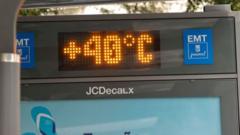
Critical Infrastructure at Risk from Extreme Heat
Tech vulnerability to extreme heat has become one of the most pressing challenges facing modern societies. Energy grids, transportation networks, and essential digital systems worldwide are increasingly exposed to operational failures when temperatures soar beyond their design specifications. The growing frequency of record-breaking heat waves demonstrates that our technological infrastructure requires immediate attention and adaptation strategies.
As global temperatures continue to rise, the resilience of these systems faces unprecedented strain. Data centers, power distribution networks, and communication facilities depend on precise environmental conditions to function optimally. When external temperatures exceed safe operating ranges, equipment begins to deteriorate, processing speeds decline, and complete system shutdowns become inevitable.
Energy Grid Vulnerability and Thermal Challenges
Electrical power systems represent perhaps the most critical infrastructure vulnerable to heat stress. Energy grids rely on sophisticated transmission equipment that operates within narrow temperature windows. Transformers, switching stations, and underground cables are particularly susceptible to thermal degradation.
During extreme heat events, demand for cooling power surges dramatically, precisely when grid capacity becomes constrained. Power lines lose efficiency at elevated temperatures, reducing their transmission capacity by up to 50 percent. Substations and generating facilities require substantial cooling water supplies, which become scarce during drought conditions accompanying heat waves.
The cascading effects prove devastating. When energy grids malfunction, hospitals lose critical power, water treatment facilities shut down, and emergency services face operational chaos. Countries worldwide have experienced rolling blackouts during severe heat episodes, leaving millions without electricity for hours or days.
Rail and Transport Network Disruptions
Train services and rail infrastructure demonstrate extreme vulnerability during heat extremes. Railway tracks expand in high temperatures, creating dangerous conditions that force operators to reduce speeds or suspend services entirely. Steel rails can warp and buckle when temperatures exceed design tolerances, posing collision and derailment risks.
Signal systems and switching equipment depend on electronic components that malfunction in excessive heat. Signaling circuits can fail, preventing trains from operating safely. Overhead power lines feeding electric trains sag and lose conductivity, reducing service capacity.
Major transit systems in Europe, Asia, and North America have implemented emergency protocols during heat waves, canceling services and stranding passengers. The London Underground experienced track buckling during recent heat events, while French railways imposed mandatory speed restrictions across entire networks.
Data Center and Digital System Vulnerabilities
Technology supporting finance, healthcare, and government services relies on data centers requiring continuous cooling. Servers generate tremendous heat during normal operations, and their reliability depends on sophisticated climate control systems. When ambient temperatures climb, cooling systems become overwhelmed.
Servers experience throttling, where processing speeds automatically reduce to prevent overheating. This degradation affects financial transactions, cloud services, and streaming platforms. In extreme scenarios, equipment shutdown occurs to prevent permanent damage.
Telecommunications infrastructure, including cellular towers and network switches, similarly depend on thermal management. Network failures during heat events isolate communities from emergency services and critical information.
Telecommunications and Network Infrastructure
Cellular networks and internet infrastructure face mounting pressure during extreme heat conditions. Base stations contain equipment with narrow operating temperature ranges. When these thresholds are exceeded, signal degradation occurs, reducing service quality across regions.
Fiber optic cables transmitting internet data become vulnerable to thermal stress. Heat causes material expansion, potentially damaging connections and reducing data transmission speeds. Amplification equipment installed along long-distance cables requires active cooling to maintain signal integrity.
Climate Change and Infrastructure Adaptation
Rising global temperatures make heat-related infrastructure failures increasingly common. Climate scientists project that extreme heat events will become more frequent and intense throughout this century. Current infrastructure design standards, established decades ago, do not account for contemporary temperature extremes.
Adaptation strategies include upgrading cooling systems, redesigning equipment for higher temperature tolerance, and implementing redundant systems. Some cities are installing reflective pavements and planting vegetation to reduce urban heat. Energy companies are investing in underground cable systems less vulnerable to atmospheric temperature variations.
However, the pace of infrastructure modernization lags behind climate change acceleration. Budgetary constraints limit the scope of upgrades, particularly in developing nations. International cooperation on technology standards and resource sharing could accelerate global adaptation efforts.
Future Resilience and Technological Solutions
Emerging technologies offer potential solutions to heat vulnerability. Advanced materials with superior temperature tolerance are under development. Artificial intelligence systems can optimize cooling efficiency and predict equipment failures before they occur.
Smart grids incorporating distributed energy resources and storage systems provide resilience that centralized systems cannot match. Microgrids can operate independently during main grid failures, ensuring critical services remain functional. Renewable energy sources, particularly solar and wind, reduce dependence on heat-vulnerable coal and nuclear plants.
Investment in infrastructure resilience ultimately saves money compared to recovering from catastrophic failures. Governments and private companies increasingly recognize that climate adaptation is an economic necessity, not merely an environmental concern.


