
Ukraine Strikes Russian Logistics Hubs with Drone Attacks on Wildberries
Ukrainian drone strikes target major Russian logistics hubs including Wildberries warehouses near Moscow and Tambov, disrupting supply chains for sanctioned components.
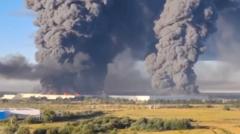
Ukrainian Drone Operations Target Russian Distribution Centers
Ukrainian drone strikes have inflicted significant damage on critical Russian logistics hubs, with particular focus on major distribution facilities operated by Wildberries, one of Russia's largest e-commerce platforms. The coordinated assault represents an escalation in Ukraine's strategy to disrupt supply chains supporting Russia's war effort and the distribution of sanctioned components throughout the country.
Wildberries Facilities Under Attack
The Ukrainian military conducted precision drone operations against Wildberries warehouses positioned strategically near Moscow and in the Tambov region. These drone strikes targeted infrastructure that Ukrainian officials identified as essential nodes in the Russian logistics network. The facilities serve as crucial distribution points for the nation's retail operations, making them high-value targets for disruption efforts.
Geographic Significance of Target Locations
The selection of locations near Moscow and Tambov demonstrates Ukraine's capacity to conduct operations across considerable distances within Russian territory. The Moscow vicinity facilities represent infrastructure supporting the nation's capital and surrounding metropolitan regions, while the Tambov location serves as a distribution hub for central Russian territories. Both locations are strategically important to Russia's domestic supply chain infrastructure.
Supply Chain Implications and Sanctioned Components
Ukrainian leadership has characterized these logistics hubs as facilitating the movement of sanctioned components and restricted materials throughout Russian territory. The distribution network maintained by these warehouses has been instrumental in circumventing international sanctions, enabling Russia to acquire and distribute prohibited technological components and materials essential to military and civilian infrastructure.
The sanctioned components flowing through these logistics hubs include electronics, semiconductors, and other advanced materials subject to strict international restrictions. By targeting the warehouses that consolidate and redistribute these materials, Ukraine aims to create bottlenecks in Russia's ability to maintain supply chains critical to both military operations and civilian economic functions.
Strategic Impact on Russian Logistics
The drone strikes represent a calculated effort to degrade Russia's logistics capabilities and disrupt the flow of goods through major distribution networks. Wildberries, as one of Russia's dominant e-commerce retailers, operates an extensive logistics infrastructure employing thousands of workers and managing millions of daily transactions. Damage to these facilities cascades through the broader Russian retail and supply ecosystem.
Economic Consequences for Russian Retail
The disruption of Wildberries operations extends beyond the immediate damage to warehouse facilities. Supply chain interruptions affect the availability of consumer goods, increase operational costs for retailers, and create market uncertainties. These economic pressures accumulate across the Russian consumer sector, straining an already fragile economy facing international sanctions and military expenditures.
Ukraine's Military Strategy Evolution
These operations reflect a significant expansion of Ukrainian military capabilities and strategic planning. The ability to execute drone strikes against infrastructure targets deep within Russian territory demonstrates technological advancement and operational sophistication. Ukraine has progressively refined its approach to targeting critical infrastructure, moving beyond immediate military objectives to economic targets that undermine Russian national resilience.
The coordinated nature of the drone strikes, involving multiple targets across geographically dispersed locations, indicates centralized planning and execution capabilities. This represents a maturing military doctrine that recognizes the interconnection between military strength and economic infrastructure. By targeting logistics networks, Ukraine applies pressure on Russia's broader economy while technically focusing on facilities supporting the war effort.
International Implications and Sanctions Enforcement
The targeting of facilities handling sanctioned components highlights the persistent challenge of enforcement in international sanctions regimes. Russia has developed sophisticated methods for acquiring prohibited materials, and the logistics networks facilitating this trade represent vulnerable points in those systems. Ukrainian operations effectively become enforcement mechanisms for international sanctions policies, degrading Russia's capacity to circumvent trade restrictions.
The drone strikes underscore the reality that sanctions enforcement increasingly involves direct military operations against supply chain infrastructure. This represents an evolution in how nations interpret and implement sanctions through military means, blurring traditional distinctions between economic and military conflict.
Broader Context of Infrastructure Targeting
These operations form part of a broader pattern of Ukrainian strikes against Russian infrastructure spanning energy facilities, transportation networks, and production centers. The systematic approach to infrastructure targeting reflects strategic decisions about which assets most directly support Russian military capabilities or undermine economic resilience. Logistics hubs emerge as particularly attractive targets because of their central role in connecting suppliers with end users.
The Ukrainian military has demonstrated capacity to collect intelligence on facility locations, operations, and significance, enabling selective targeting. This intelligence capability, combined with drone technology, creates asymmetric warfare advantages that offset Russia's conventional military advantages in certain domains.


