UK Lacking Coherent China Strategy, MPs Warn
Parliamentary committee warns UK is improvising China policy without coherent strategy, risking business interests and security. Labour faces criticism for inconsistent approach.
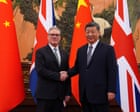
UK China Strategy Faces Parliamentary Criticism
A comprehensive investigation by the Commons business, innovation, science and trade select committee has raised serious concerns about the UK's approach to China policy. The report concludes that the UK is developing its China strategy in an ad-hoc manner, without a clear overarching framework that addresses both economic and security considerations. This lack of direction threatens to undermine British interests while leaving critical national security vulnerabilities unresolved.
The committee's findings highlight that the current UK China strategy lacks the coherence needed to effectively navigate complex bilateral relations. Rather than following a predetermined roadmap, policymakers are reportedly making decisions reactively, adjusting course based on immediate pressures rather than long-term objectives. This approach has prompted significant concern among lawmakers who fear the consequences could be substantial for the nation's economic standing and international security posture.
Labour Administration's Policy Failures
Since taking office in 2024, the Labour government has struggled to articulate a unified vision for managing UK-China relations. According to the parliamentary report, this failure to establish a clear and coherent strategy represents a significant policy gap that has created confusion both domestically and internationally. The committee suggests that Labour's approach has effectively combined negative aspects of multiple strategies while failing to achieve the benefits of any single comprehensive framework.
The criticism extends beyond mere tactical inconsistency. Parliamentary members argue that without a defined UK China strategy, the government lacks clear criteria for making decisions about investment, trade, technology partnerships, and security measures. This vacuum in policy direction creates opportunities for external pressures to influence British decision-making, whether those pressures come from Washington or Beijing.
Business and Economic Implications
One of the primary concerns outlined in the committee's findings relates to the impact on British businesses operating within or trading with China. Without a coherent UK China strategy, companies face uncertainty about regulatory frameworks, investment protections, and market access. Businesses require stable, predictable policies to make long-term investment decisions and plan expansion strategies.
The inconsistent approach to China policy creates competitive disadvantages for British enterprises. Companies struggle to understand government intentions regarding technology partnerships, supply chain diversification, and market participation. This ambiguity discourages investment and weakens Britain's economic position in one of the world's largest markets. The parliamentary report emphasizes that a clear, consistent UK China strategy is essential for supporting British business interests while maintaining appropriate security safeguards.
National Security Vulnerabilities
Beyond economic concerns, the committee identifies serious gaps in how the UK addresses security risks associated with China relations. The absence of a comprehensive UK China strategy means potential threats to national security remain inadequately addressed. These vulnerabilities span multiple domains, including technology, critical infrastructure, intellectual property protection, and espionage prevention.
The parliamentary investigation reveals that decision-making on sensitive security matters proceeds without the benefit of a unified strategic framework. This reactive approach means responses to security challenges are often delayed, fragmented, or inconsistent across government departments. The committee warns that this situation leaves Britain exposed to risks that could be mitigated through coordinated, forward-thinking policy development.
Risk of External Influence on Policy
A particularly troubling aspect of the current situation is the possibility that the UK's China policy could be increasingly dictated by either Washington or Beijing, rather than being driven by British national interests. Without an independent, coherent UK China strategy, British policymakers lack a firm foundation for making autonomous decisions about bilateral relations.
The parliamentary report expresses concern that Britain's negotiating position becomes weakened when policy appears inconsistent or improvised. Strategic competitors recognize opportunity when policy lacks clarity, potentially exploiting this ambiguity to advance their own interests at Britain's expense. The committee urges immediate action to develop a comprehensive strategic framework that protects British autonomy in decision-making.
Recommendations and Path Forward
The parliamentary committee's report calls for urgent development of a comprehensive, whole-of-government UK China strategy. This strategy must balance legitimate economic and diplomatic interests with essential security protections. The framework should establish clear principles, identify priority areas, and outline decision-making processes across all relevant government departments.
Effective implementation of a coherent UK China strategy requires coordination between business, defence, intelligence, and diplomatic agencies. The government must consult with stakeholders in both public and private sectors to develop approaches that are both realistic and sustainable. According to the committee, only through such comprehensive planning can the UK protect its interests while maintaining flexibility to respond to evolving circumstances in UK-China relations.