
Trump Reduces Military Drills with South Korea Citing Diplomatic Relations
Trump announces scaling back military exercises with South Korea, crediting his strong relationship with North Korea's leader as key factor in decision.
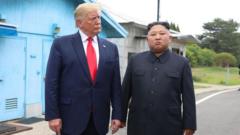
Trump Administration Announces Scaled-Back Military Exercises
The Trump administration has signaled a significant shift in its defense strategy by announcing plans to substantially reduce military drills with South Korea. This Trump military drills South Korea decision marks a notable pivot in the approach to operations on the Korean Peninsula, with the commander-in-chief emphasizing diplomatic considerations over traditional security protocols.
In explaining the rationale behind the downsizing of these exercises, Trump highlighted what he describes as his "very good relationship" with North Korea's leader. This personal diplomatic connection, according to the president, has become a determining factor in reassessing the scope and frequency of joint military operations that have historically been cornerstones of the US-South Korea defense alliance.
Strategic Reasoning Behind the Decision
The administration's approach reflects a broader strategy that prioritizes direct engagement with North Korean leadership over the continuation of large-scale military demonstrations. Trump has consistently maintained that his personal rapport with the North Korean leader provides an alternative pathway to security concerns that traditionally would be addressed through military preparedness exercises.
Military analysts have noted that such drills, while designed as defensive measures and deterrents, can sometimes escalate tensions in the region. By reducing these exercises, the Trump administration appears to be betting that diplomatic channels and personal relationships can achieve stability objectives more effectively than conventional military posturing.
Impact on the US-South Korea Alliance
The decision to scale back military drills with South Korea represents a departure from decades of established protocol. These exercises have long been considered essential components of the security framework that protects the South Korean peninsula and reassures allied nations in the Asia-Pacific region.
South Korea has not directly participated in military actions against Iran, which was cited in initial reporting about the decision. However, the Trump administration's recalibration of military operations in Korea appears to be part of a larger reassessment of global military commitments and priorities.
North Korea Diplomatic Relations
Trump's emphasis on his relationship with North Korea's leadership underscores his administration's unconventional approach to foreign policy challenges. Rather than relying solely on military might and deterrence, the president has pursued direct dialogue and personal summits with the North Korean leader.
This diplomatic overture has been characterized by both supporters and critics as a significant departure from traditional US foreign policy approaches toward the reclusive regime. Supporters argue that personal relationships can open new possibilities for negotiation, while detractors worry about potentially conceding leverage without concrete diplomatic gains.
Regional Security Implications
The scaling back of joint military exercises carries significant implications for regional stability and the broader security architecture in East Asia. Japan and other regional allies closely monitor any changes to military deployments and training operations in Korea.
The Trump military drills South Korea reduction also sends signals to China and other regional powers about shifting US military priorities and commitment levels. Defense experts have indicated that such changes in exercise frequency and scale can influence perceptions of American resolve and capability in the region.
Future of US-South Korea Defense Cooperation
Despite the announced reduction in military drills, official statements suggest that the fundamental defense alliance between the United States and South Korea remains intact. Both nations continue to maintain significant military presence and coordination mechanisms, though the nature and scope of joint exercises will be modified.
The Trump administration has indicated that while large-scale joint drills will be scaled back, other forms of military cooperation and coordination will continue. This nuanced approach attempts to balance diplomatic objectives with security responsibilities to the South Korean government and people.
Looking Forward
As the Trump military drills South Korea initiative proceeds, observers will be watching closely to assess whether reduced military exercises correlate with improved diplomatic outcomes in North Korea negotiations. The success or failure of this strategy could reshape US military doctrine and alliance management in the Pacific region for years to come.
The administration's confidence in its diplomatic relationship with North Korean leadership stands as the central justification for this significant military policy adjustment. Whether this approach yields the intended diplomatic breakthroughs or creates unforeseen security vulnerabilities remains an open question for defense analysts and policymakers worldwide.


