
Tech Stocks Drive Asian Markets Lower This Week
Asian tech stocks experience significant decline as South Korea's Kospi halts trading for third time. Market volatility impacts regional exchanges.
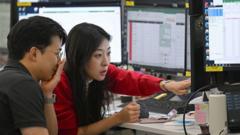
Asian Tech Stocks Decline Amid Market Volatility
Asian tech stocks decline continues to pressure major regional indices as investor concerns deepen across the technology sector. Trading activity on South Korea's Kospi index reached critical levels this week, prompting exchange authorities to implement protective measures to stabilize markets.
The decision to halt trading represents a significant intervention by regulators seeking to manage panic-driven selling pressure that has affected sentiment across Asia's largest equity markets. This marks the third such interruption in seven days, underscoring the severity of recent market turbulence.
South Korea's Kospi Index Faces Trading Constraints
South Korea's Kospi trading halt protocol activated as share prices tumbled, creating conditions that typically trigger automatic circuit breakers designed to restore order. Exchange operators determined that without intervention, cascading sell-off momentum could accelerate losses and create systemic risks throughout the interconnected Asian financial ecosystem.
Investors worldwide watch closely as South Korea, hosting several of the world's largest technology manufacturers and semiconductor producers, experiences these disruptions. The nation's equity markets serve as barometers for broader technology sector health and international demand forecasts.
Technology Sector Weakness Spreads Across Region
The technology sector slump affecting South Korea extends beyond individual company performance issues. Broader economic concerns, including potential interest rate trajectories, currency fluctuations, and global demand uncertainty, compound difficulties facing technology companies with significant international exposure.
Major electronics manufacturers, semiconductor producers, and software developers listed on the Kospi have seen valuations compress as investors reassess growth assumptions. This downturn reflects shifting market dynamics where previously high-flying technology stocks face heightened scrutiny regarding profitability timelines and competitive positioning.
Regional Stock Exchange Volatility Increases
Beyond South Korea's borders, other Asian exchanges experience spillover effects from technology weakness. Markets in Japan, Singapore, Hong Kong, and mainland China respond to sentiment shifts as institutional and retail investors reallocate portfolios in response to changing conditions.
Trading volume patterns demonstrate heightened uncertainty, with some investors reducing exposure while others attempt to capitalize on lower valuations. The frequency of trading halts suggests market participants struggle to establish equilibrium prices given conflicting information about technology sector fundamentals.
Circuit Breaker Mechanisms in Modern Markets
Exchange circuit breakers exist specifically to prevent chaotic conditions during extreme volatility periods. When predetermined price movement thresholds get exceeded within narrow timeframes, automatic trading halts activate, providing participants moments to reassess positions and modify strategies without panic dynamics dominating decision-making.
South Korea's Kospi index deployment of these mechanisms three times in one week indicates sustained pressure rather than isolated incidents. This pattern alerts market surveillance teams and regulatory authorities that underlying conditions require monitoring and potential policy responses.
Investment Implications and Outlook
The Asian tech stocks decline raises questions about sustainable valuation levels and future performance expectations. Investors must balance concerns about near-term headwinds against long-term technology sector growth potential and demographic trends favoring innovation.
Market participants await clarity on several fronts: earnings report releases from major technology companies, statements from central banks regarding monetary policy direction, and geopolitical developments affecting supply chains and international commerce patterns.
As trading normalizes and markets establish new equilibrium levels, analysis of this period's volatility will inform investment strategies going forward. The challenges facing Asian technology stocks and broader regional equity markets reflect complexity inherent in modern financial systems, where multiple factors simultaneously influence price discovery mechanisms.


