
Starmer Marks End of Political Career at Final Prime Minister's Questions
Keir Starmer reflects on his political journey during his final PMQs session as departing Prime Minister, receiving tributes from MPs across Parliament.
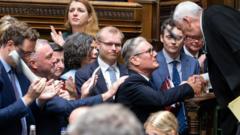
Starmer's Final Prime Minister's Questions: Closing Chapter of Political Career
Keir Starmer characterized his appearance at the despatch box as the culmination of his extensive political journey during what would become his final Prime Minister's Questions session. The departing head of government took the opportunity to reflect on his tenure while facing members of parliament in the traditional weekly exchange that has defined much of his leadership.
Emotional Tributes Across Parliament
Members representing constituencies spanning the entire political spectrum rose to acknowledge Starmer's imminent departure from the highest office in British politics. The atmosphere within the chamber transformed from the typical robust parliamentary debate into one of genuine reflection and recognition. Colleagues from opposing benches engaged in exchanges that transcended the usual partisan disagreements, instead focusing on shared respect and professional acknowledgment.
Cross-Party Recognition and Respect
MPs demonstrated unusual unity in their remarks directed at the departing Prime Minister. Rather than utilizing the platform to advance political point-scoring, members chose to highlight moments of shared experience and mutual understanding. The recognition extended across factional divisions within parties themselves, underscoring the personal regard in which many colleagues held Starmer.
Memorable Exchanges and Anecdotes
Throughout the session, parliamentarians interspersed their remarks with lighter moments of humor and personal stories. These anecdotes painted a portrait of Starmer beyond his official role, revealing dimensions of his character that resonated with those who had worked alongside him throughout his political career. The sharing of these memories created an informal yet profoundly respectful atmosphere unusual for the formal setting of Prime Minister's Questions.
Humor and Levity in Farewell
The deployment of carefully crafted jokes and witty remarks provided balance to the more serious tributes. These humorous interjections demonstrated the camaraderie that often develops among elected officials despite their public disagreements. The laughter that punctuated the session reflected a genuine connection between colleagues who had contested elections and policies yet maintained personal respect.
Significance of the Historic Session
Starmer's final Prime Minister's Questions represented more than a routine parliamentary procedure. The event symbolized a turning point in British politics, marking the conclusion of a notable chapter in his extensive public service. His description of this moment as the "end of my political journey" carried weight within the chamber, prompting widespread reflection on his contributions to public life.
Legacy and Parliamentary Tradition
The dignified manner in which members conducted themselves during this final session honored long-standing parliamentary traditions surrounding transitions in leadership. Rather than viewing the occasion as an opportunity to attack a departing opponent, the House of Commons collectively chose to recognize the gravity of the moment and the significance of marking such transitions with appropriate solemnity.
The Nature of Prime Minister's Questions
Prime Minister's Questions sessions typically showcase the adversarial nature of Westminster democracy. Yet this particular edition demonstrated how the same institution can adapt its character to mark occasions of particular significance. The transformation illustrated the duality inherent in parliamentary culture: the capacity for rigorous debate coupled with recognition of shared democratic purpose.
Reflections on Service and Duty
Members' contributions highlighted the dedication required of those holding public office at the highest levels. The tributes acknowledged both the challenges and privileges associated with Prime Ministerial responsibility. Several MPs referenced the demanding nature of the role, contextualizing their remarks within understanding of the personal toll such positions demand from those who occupy them.
Concluding Remarks and Continuity
The session concluded with recognition that while Starmer's tenure at Prime Minister's Questions had ended, parliamentary democracy itself would continue unchanged. The peaceful transfer of power and the dignified conclusion of one political leader's tenure demonstrated the resilience of democratic institutions. His final appearance embodied the principle that individual leaders, regardless of their significance, ultimately serve broader institutional purposes.
As Starmer departed the chamber following his final Prime Minister's Questions, he carried with him the collective acknowledgment of colleagues who had witnessed his political journey's conclusion. The moment represented both an ending and affirmation of democratic processes that extend far beyond any single individual's tenure in office.


