
Spain's Migrant Crisis Sparks Political Turmoil Across Europe
Spain's migrant crisis at Ceuta has created unprecedented political divisions in Europe. Discover how migration tensions are reshaping EU policy.
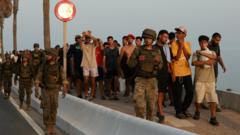
Spain's Migrant Crisis: A European Political Flashpoint
Spain's migrant crisis has become one of the most divisive issues confronting the European Union, fundamentally challenging how member states approach immigration policy and border management. The situation at Ceuta, a Spanish enclave on the North African coast, has transcended local concerns to become a catalyst for broader political instability across the continent, revealing deep ideological fissures within European institutions and governments.
The Ceuta Crossings: Catalyst for Continental Discord
The crossings at Ceuta represent far more than a simple border management challenge. This Spanish territory has witnessed unprecedented numbers of migrants attempting to reach Europe, creating a pressure point that has exposed the vulnerability of European migration frameworks. The incidents have triggered heated debates in national parliaments, EU institutions, and media outlets throughout the continent.
Authorities in Spain have found themselves managing an extraordinarily complex situation, balancing humanitarian concerns with border security imperatives. The sheer volume of individuals seeking entry through Ceuta has overwhelmed traditional reception and processing systems, forcing policymakers to confront uncomfortable questions about Europe's capacity to manage migration flows.
Political Divisions Reshape European Relations
The Spain migrant crisis has fractured the traditional consensus among European nations regarding immigration policy. Countries have lined up on opposing sides of the debate, with some advocating for more restrictive border controls and others emphasizing humanitarian obligations. These competing perspectives have strained diplomatic relationships and complicated negotiations within EU forums.
National governments have increasingly pursued divergent strategies, undermining efforts to develop cohesive European responses. Conservative parties have seized upon migration concerns to galvanize political support, while progressive movements emphasize humanitarian and integration dimensions. This polarization has weakened institutional capacity to formulate unified policy responses.
Social Media's Amplification Effect on Migration Narratives
Digital platforms have accelerated the politicization of Spain's migrant crisis, transforming localized events into continental controversies. Social media has enabled rapid dissemination of competing narratives, allowing political actors to shape public perception with unprecedented speed and reach. Misinformation and selective framing have proliferated across platforms, influencing political discourse and public opinion.
The visual nature of social media content has made migration imagery particularly potent. Videos and photographs from Ceuta have circulated globally, often stripped of context or interpreted through opposing ideological lenses. This dynamic has intensified emotional responses and hardened political positions among various constituencies.
Humanitarian Dimensions of the Crisis
Beyond political calculations, Spain's migrant crisis raises fundamental humanitarian questions. Individuals attempting the dangerous journey to Ceuta flee precarious conditions in their origin countries, seeking safety and economic opportunity. The crossings have resulted in tragic incidents, highlighting the human stakes underlying policy debates.
Organizations monitoring human rights have documented concerning conditions at reception facilities and the treatment of migrants throughout the processing system. These reports have added additional layers of complexity to political discussions, as ethical considerations intersect with practical governance challenges.
European Border Management Under Strain
The Ceuta crossings have exposed systemic weaknesses in European border management infrastructure. The Schengen Area's principles of free internal movement depend upon effective external border control, yet the concentration of migration pressure at specific geographic points has demonstrated vulnerabilities in this system. Individual member states like Spain bear disproportionate responsibilities for managing entry points.
Resources dedicated to border management and migrant processing have proven insufficient for addressing the scale of current challenges. This resource deficit has created bottlenecks and has strained relationships between Spain and other European nations that perceive unequal burden-sharing in managing migration flows.
Long-term Implications for European Policy
Spain's migrant crisis will likely shape European immigration policy for years to come. The incident has accelerated conversations about reforming asylum procedures, distributing responsibility more equitably among member states, and strengthening external borders. However, fundamental disagreements about policy direction persist, complicating consensus-building efforts.
Future European responses to migration will be tested against precedents established during this period. Political leaders recognize that failure to address root causes and develop sustainable frameworks will invite repeated crises at vulnerable border points. The Spain migrant crisis thus represents not merely a temporary challenge but a structural problem requiring comprehensive European solutions.


