
Secret Service Tactics Reveal Deceptive Operations to Shield US Presidents
Discover how the Secret Service employs sophisticated deception tactics and elaborate shell game strategies to protect US presidents in plain sight from potential threats.
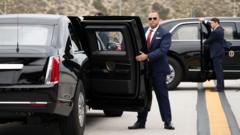
Understanding Secret Service Deception Tactics
The protective framework surrounding the President of the United States relies heavily on Secret Service deception tactics to maintain security and ensure presidential safety. These intricate operational mechanisms have evolved into a complex system designed to mislead potential adversaries while keeping the chief executive shielded from harm. By implementing sophisticated strategies that blur the line between reality and misdirection, security professionals create an environment where threats cannot accurately predict or track presidential movements.
Secret Service deception tactics encompass a broad range of methodologies that extend far beyond simple security measures. The agency combines technological innovations, strategic personnel deployment, and coordinated communications to establish multiple layers of protection. Each component works synergistically to create an environment where the actual location and movements of the president remain obscured from public knowledge and malicious intent.
The Shell Game Strategy in Presidential Protection
At the core of protective operations lies what security experts commonly refer to as the shell game approach. This methodology involves creating multiple plausible scenarios regarding presidential whereabouts, travel routes, and public appearances. The shell game strategy functions by presenting several seemingly credible options to potential threats, making it computationally and logistically impossible for adversaries to determine which scenario represents the actual presidential movement.
The Secret Service employs decoy vehicles that mirror the presidential motorcade in appearance and composition. These elaborate decoy operations travel alternative routes while the actual presidential transport follows a completely different path. Trained personnel operate these decoys with the same security protocols and apparent urgency as genuine movements, creating convincing diversions that appear indistinguishable from authentic presidential travel to external observers.
Operational Components of Elaborate Decoy Operations
Elaborate decoy operations involve meticulous coordination across multiple agencies and personnel divisions. The Secret Service synchronizes with local law enforcement, federal authorities, and specialized tactical units to execute these complex maneuvers. Each participant understands their role in maintaining operational security while contributing to the overall protection framework.
Personnel assigned to decoy operations receive extensive training to replicate authentic presidential security protocols. They practice facial recognition evasion techniques, communication procedures that mirror genuine protective detail activities, and tactical responses that convincingly simulate real-world protective scenarios. This training ensures that external observers cannot distinguish between legitimate presidential movements and elaborate diversions.
Technology and Intelligence Integration
Modern threat assessment relies on real-time intelligence gathering, signal interception, and sophisticated surveillance detection. The Secret Service integrates advanced technological systems that monitor potential threats while simultaneously broadcasting deceptive signals and false data trails. These technological countermeasures prevent adversaries from using modern surveillance equipment to track presidential movements accurately.
Communication security represents another critical component of Secret Service deception tactics. Encrypted radio frequencies, classified communication protocols, and compartmentalized information distribution ensure that genuine operational details remain inaccessible to unauthorized parties. False communications and misdirecting transmissions further complicate threat analysis efforts.
Historical Context and Evolution
The development of sophisticated deception strategies emerged from historical incidents and evolving threat assessments. Secret Service protocols have continuously adapted to counter emerging technologies and increasingly sophisticated adversarial methods. Each new threat level prompts operational refinements and enhanced protective measures.
Presidential protection strategies have expanded significantly since earlier eras when security measures were considerably more rudimentary. Contemporary operations incorporate lessons learned from international diplomatic security protocols, military protective operations, and ongoing threat intelligence assessments.
Public Perception and Operational Security Balance
Maintaining operational security while allowing necessary public presidential appearances creates a delicate balance. The Secret Service must project sufficient protective measures to deter potential threats while avoiding appearances of excessive force or militarization. This balance influences how elaborate decoy operations are coordinated and executed within public view.
The shell game strategy extends into public communication management. Scheduled appearances, travel announcements, and official movements are often revealed with strategic timing that prevents threat actors from establishing comprehensive surveillance positions. Last-minute route modifications, accelerated timelines, and contingency protocols further enhance protective effectiveness.
Threat Prevention Through Misdirection
Effective threat prevention methods incorporate psychological elements that create uncertainty and unpredictability. When potential adversaries cannot reliably determine presidential whereabouts or movement patterns, they cannot effectively plan harmful actions. This uncertainty principle forms the foundation of modern presidential protection philosophy.
Secret Service deception tactics transform threat prevention from a purely reactive security posture into a proactive operational framework. By controlling the information landscape and creating multiple competing narratives about presidential movements, security professionals establish environmental conditions where attacks become logistically impractical and operationally impossible to execute.
The continuous evolution of Secret Service protective operations demonstrates institutional commitment to maintaining presidential security despite increasingly sophisticated global threats. Through elaborate deception operations, technological integration, and strategic personnel deployment, the agency successfully shields the nation's chief executive while preserving democratic processes and public accessibility.


