
Putin's Victory Claims Crumble in Ukraine War, Peace Advocate Warns
Nobel Peace Prize winner Dmitry Muratov tells BBC that Putin can no longer claim victory in Ukraine. The five-year conflict reveals the Kremlin's inability to conquer the nation.
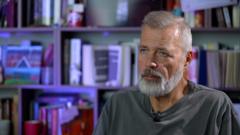
Putin Cannot Claim Victory in Ukraine Conflict
In a significant statement, a prominent Nobel Peace Prize recipient has declared that Putin's prospects for claiming victory in Ukraine have fundamentally deteriorated. During an exclusive conversation with BBC correspondent Steve Rosenberg, the acclaimed peace advocate articulated a sobering assessment of the ongoing military struggle that has defined Eastern European geopolitics for the past five years.
The assessment reflects growing international recognition that the initial Russian military objectives in Ukraine have become increasingly unattainable. Rather than achieving the swift political transformation envisioned by the Kremlin at the conflict's outset, the extended warfare has exposed substantial limitations in Russia's strategic capacity and military capabilities.
The Kremlin's Destructive Path vs. Territorial Conquest
The fundamental distinction drawn in this analysis separates destruction from genuine conquest. While the Kremlin possesses the firepower to inflict extensive damage across Ukrainian territory, the capacity to effectively govern and integrate conquered lands into Russian control remains severely compromised. This asymmetry has become increasingly apparent as the conflict has progressed through multiple phases of escalation and strategic repositioning.
Ukraine's resilience throughout this prolonged confrontation has demonstrated that despite overwhelming pressure and significant territorial losses in certain regions, the nation's will to resist remains unbroken. The population's determination to preserve national sovereignty has consistently confounded Russian military planners who may have anticipated a more rapid capitulation.
Five Years of Continuous Warfare Reshape Regional Dynamics
The transition of this conflict from acute crisis to protracted war fundamentally alters its character and implications. As the fifth year of hostilities unfolds, the international community has developed more sophisticated understandings of the conflict's trajectory, the limitations of military solutions, and the human costs embedded in sustained warfare.
The Kremlin's strategic position has been complicated by several interconnected factors. Economic sanctions have constrained Russia's capacity to sustain indefinite military operations at current intensity levels. Meanwhile, Western military aid to Ukraine has evolved in scope and sophistication, providing defenders with increasingly capable systems for both offensive and defensive operations.
International Perspective on War Outcomes
The intervention of respected voices in the peace advocacy community carries particular weight in shaping international perceptions of the conflict's probable outcomes. When such figures articulate assessments contradicting Kremlin narratives, they contribute to the broader global consensus regarding the unrealistic nature of Russian political objectives in Ukraine.
This perspective aligns with analyses from military strategists, geopolitical analysts, and diplomatic observers who have increasingly questioned whether any achievable military outcome could justify the enormous human and material costs already accumulated. The psychological and political cost of indefinite warfare affects both combatant nations, though asymmetrically.
The Destruction versus Governance Challenge
One of the most significant insights contained in this assessment concerns the distinction between military destruction and political control. History demonstrates repeatedly that occupying armies require substantial resources and favorable local conditions to govern effectively. In Ukraine's case, neither condition appears likely to materialize in ways favorable to Russian interests.
The Kremlin faces an increasingly untenable situation where continued military operations generate rising costs while delivering diminishing strategic returns. The capacity to destroy infrastructure, displace populations, and generate humanitarian crises differs fundamentally from the capacity to establish legitimate governance structures accepted by subjected populations.
Looking Forward: Impasse and Stalemate
As this conflict extends further into its fifth year, the emerging reality suggests movement toward military stalemate rather than decisive victory for either party. This outcome, while disappointing to those anticipating clearer resolution, may represent the most realistic assessment of probable developments in coming months and years.
The significance of voices from the international peace community cannot be understated in this context. Their assessments help anchor public discourse in realistic evaluations of military and political possibilities, countering propaganda narratives from all parties to the conflict. For Ukraine and Russia alike, understanding these constraints may ultimately prove essential for any sustainable resolution to the ongoing struggle.


