
Infantino Rivals Issue Non-Cooperation Ultimatum to FIFA
FIFA president Infantino faces mounting pressure as opponents threaten non-cooperation campaign unless he resigns from office, sources reveal.
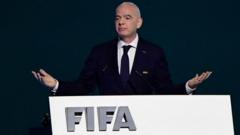
Infantino Faces Mounting Pressure Over Non-Cooperation Threats
The future of FIFA leadership hangs in the balance as powerful opponents of President Gianni Infantino have escalated their challenge, warning of coordinated non-cooperation with the international football governing body if he refuses to step down. According to multiple senior officials within UEFA, these threats represent a significant turning point in ongoing disputes surrounding Infantino's tenure at the helm of world football's administrative apparatus.
The Non-Cooperation Campaign Strategy
Sources close to UEFA hierarchy have disclosed details about the organized resistance movement targeting Infantino's continued leadership. The non-cooperation strategy represents a drastic measure, indicating the depth of dissatisfaction among influential stakeholders within European football circles. This coordinated approach signals that opponents have moved beyond merely voicing criticism toward implementing concrete institutional pressure.
The timing of these threats suggests a calculated escalation by organizations and individuals who have long questioned Infantino's administrative decisions and vision for the sport's governance structure. The non-cooperation ultimatum effectively creates a ultimatum scenario where compliance with their demands becomes necessary to maintain functional relationships across international football operations.
UEFA's Position in the Dispute
European football's governing body has maintained close monitoring of the situation surrounding Infantino's leadership. Senior UEFA sources have become instrumental in revealing the intensity of resistance brewing within continental football associations. Their willingness to speak publicly about the non-cooperation threats underscores serious institutional concerns about current FIFA administration direction and accountability mechanisms.
The European perspective holds particular weight given UEFA's status as the largest continental confederation within FIFA's structure. Their involvement in potential non-cooperation efforts would severely complicate Infantino's ability to govern effectively and maintain consensus-based decision-making processes essential for FIFA's operations.
Implications for FIFA's Operational Framework
A widespread non-cooperation campaign would create substantial operational challenges for FIFA's various administrative divisions and competitive frameworks. Implementation of such a strategy would likely disrupt coordination between continental confederations and FIFA's central authority, potentially affecting tournament organization, rule implementation, and financial arrangements.
The stakes extend beyond personality-driven politics; they encompass fundamental questions about how international football governance structures should function and whether current leadership operates with sufficient transparency and accountability. The non-cooperation threat essentially weaponizes institutional leverage to force reconsideration of Infantino's continued tenure.
What Happens Next
The situation remains fluid, with negotiations and behind-the-scenes discussions continuing among key stakeholders. Whether Infantino will respond to mounting pressure by resigning voluntarily or whether opponents will pursue formal institutional mechanisms to challenge his leadership remains unclear. The non-cooperation threats establish a deadline-driven context where decisions made in coming weeks could fundamentally reshape FIFA's leadership structure and governance orientation.
Football observers across the globe are watching closely as this high-stakes institutional drama unfolds within FIFA's corridors of power, where the balance between maintaining international cooperation and enforcing leadership accountability hangs precariously in balance.


