
Ice Pyramids: Artificial Glaciers Securing Water Supply for Himalayan Villages
Artificial glaciers in Himalayan villages provide crucial water for crops during spring. Discover how ice pyramids are transforming agricultural sustainability in mountain communities.
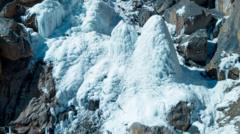
Artificial Glaciers: A Lifeline for Himalayan Agriculture
Artificial glaciers are emerging as a revolutionary solution for mountain communities across the Himalayan region facing severe water scarcity challenges. These innovative ice pyramids are being strategically constructed in remote villages to guarantee reliable water supply for agricultural operations during critical spring planting seasons. The technique represents a groundbreaking approach to sustainable resource management in some of the world's most challenging geographical environments.
The Challenge of Water Scarcity in Mountain Communities
Himalayan villages have long struggled with unpredictable water availability, particularly during spring months when agricultural demands peak. Traditional glaciers, which historically provided consistent meltwater flows, have been retreating due to climate change and shifting precipitation patterns. This environmental transformation has forced local communities to seek alternative solutions to protect their livelihoods and ensure food security.
The water crisis affects thousands of farming families who depend entirely on seasonal water flows for irrigating crops such as barley, wheat, and various vegetables. Without adequate water during critical growing periods, entire harvests can be lost, threatening both economic stability and food independence in these isolated regions.
How Artificial Glaciers Work
The artificial glacier technology operates on a deceptively simple yet highly effective principle. Engineers and local innovators construct pyramid-shaped or cone-shaped ice structures in shaded valleys where temperatures remain below freezing throughout winter and early spring. These ice pyramids are built by channeling water from natural sources during cold months, allowing it to freeze in layers.
The distinctive pyramid design serves multiple purposes in glacier creation. The shape maximizes surface area exposure to cold temperatures while minimizing heat absorption from direct sunlight. The steep angles allow snow and ice to accumulate more efficiently, and the geometry helps protect the core from seasonal temperature fluctuations that could cause premature melting.
Strategic Implementation in Mountain Villages
Communities throughout the Himalayas have begun implementing artificial glacier projects with remarkable success rates. Engineers carefully select locations based on detailed analysis of temperature patterns, water availability, and topographical features. The construction process typically begins in autumn, with water channeling and initial ice formation occurring throughout winter months.
By spring, when agricultural water demands reach their peak, these artificial glaciers begin their controlled melt, releasing water directly into irrigation channels that serve farming communities. The timing of this water release can be partially managed through strategic ice construction and structural design, allowing villages to optimize water distribution during critical planting seasons.
Impact on Agricultural Sustainability
The introduction of artificial glaciers has demonstrated transformative effects on agricultural productivity across mountain villages. Farmers report increased crop yields and improved reliability in harvests, as water availability no longer depends entirely on unpredictable natural precipitation patterns. This enhanced agricultural stability strengthens local economies and reduces food insecurity in previously vulnerable communities.
Beyond immediate agricultural benefits, artificial glaciers contribute to broader environmental and social resilience. Communities can maintain traditional farming practices while adapting to contemporary climate challenges. The technology empowers local populations to take active control of their water resources rather than remaining passive victims of environmental change.
Scaling the Solution Across Himalayan Regions
Various government agencies and non-profit organizations have recognized the potential of artificial glacier technology and begun supporting expansion efforts. Projects have been successfully implemented in regions of India, Nepal, and Tibet, with each location adapting the core technology to unique local conditions and requirements.
The scalability of artificial glacier construction makes it particularly attractive for widespread adoption. Unlike expensive infrastructure projects requiring substantial external investment, these ice pyramids can be built using locally available materials and traditional construction knowledge combined with modern engineering principles. This combination makes the solution accessible to even the poorest mountain communities.
Long-Term Sustainability and Future Prospects
While artificial glaciers represent a significant advancement in water management technology, experts emphasize that they function best as part of comprehensive watershed management strategies. Communities implementing these ice pyramids simultaneously pursue water conservation measures, improved irrigation efficiency, and sustainable agricultural practices.
Climate scientists predict that artificial glacier technology will become increasingly important as global temperatures continue rising and natural glacier coverage diminishes throughout mountain regions worldwide. The success of Himalayan projects provides a replicable model for communities facing similar water scarcity challenges in other parts of the world, from the Andes to Central Asia.
As mountain villages continue perfecting artificial glacier techniques, they demonstrate remarkable innovation in responding to environmental challenges while preserving traditional ways of life. These ice pyramids stand as monuments to human adaptability and determination, ensuring that future generations can sustain themselves through the seasons ahead.


