
Helium-3 from the Moon: Future Energy Source or Distant Dream?
Discover why Helium-3 from the moon could revolutionize energy production. Explore mining possibilities, costs, and what scientists say about lunar extraction.
Understanding Helium-3: The Rare Isotope Reshaping Energy Discussions
Helium-3 from the moon represents one of the most intriguing possibilities in alternative energy development and space exploration. This lightweight isotope, distinct from the common helium-4 found in Earth's atmosphere, has captured the imagination of scientists, engineers, and entrepreneurs who see it as a potential breakthrough in clean energy generation. As global demand for sustainable power sources intensifies, the prospect of extracting Helium-3 from the moon's surface has evolved from science fiction into serious scientific consideration.
The fundamental difference between Helium-3 and standard helium lies in its nuclear structure and potential applications. While Helium-3 occurs naturally on Earth, it exists in extremely limited quantities, making it prohibitively expensive for most applications. The moon, however, harbors substantially larger concentrations of this valuable isotope, deposited over billions of years through solar wind interactions with the lunar surface. This geological advantage has prompted researchers worldwide to investigate whether extracting Helium-3 from the moon could eventually meet Earth's growing energy requirements.
Why Helium-3 Commands Such Astronomical Prices
The cost of Helium-3 reflects both its scarcity and its exceptional properties. Current market prices for terrestrial Helium-3 exceed several thousand dollars per liter, placing it among the most expensive substances on Earth. This astronomical price tag stems from the isotope's limited availability, as it must be produced in nuclear reactors or extracted from rare geological deposits. The expense has restricted Helium-3 applications primarily to specialized scientific instruments, medical equipment, and classified military technologies.
Projected demand for Helium-3 is forecast to soar significantly over the coming decades. Researchers anticipate increased usage in advanced detection systems, fusion energy research, and emerging medical imaging technologies. Some projections suggest demand could escalate dramatically if fusion reactors capable of utilizing Helium-3 become commercially viable. This anticipated surge in demand strengthens the economic case for lunar extraction operations, as terrestrial supplies would prove entirely insufficient to satisfy global needs.
Lunar Mining: A Solution to Earth's Supply Constraints
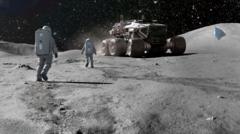
The moon's regolith, or surface soil, contains measurable quantities of Helium-3 deposited through millennia of solar wind deposition. Scientists estimate that the lunar surface harbors millions of metric tons of this isotope, representing a virtually inexhaustible supply compared to Earth's meager reserves. Extracting Helium-3 from the moon would require establishing mining operations on the lunar surface, processing facilities to separate the isotope from surrounding materials, and transportation systems to deliver the extracted resource back to Earth.
Several space agencies and private companies have begun developing preliminary concepts for lunar mining operations. These plans typically involve robotic excavation equipment, heating systems to release Helium-3 from lunar soil, and containment vessels for safe transport. The technological challenges, while substantial, appear increasingly solvable as space exploration capabilities advance. Helium-3 from the moon could fundamentally transform global energy markets if extraction becomes economically competitive with terrestrial production methods.
Technical and Economic Obstacles to Overcome
Despite the tantalizing potential of obtaining Helium-3 from the moon, significant technical hurdles remain. The extreme lunar environment, characterized by temperature fluctuations ranging from minus 173 degrees Celsius to 127 degrees Celsius, poses extraordinary engineering challenges. Equipment must operate reliably in this harsh landscape while mining equipment extracts and processes regolith containing extremely small Helium-3 concentrations. Additionally, the cost of launching materials to the moon and returning processed Helium-3 to Earth currently exceeds any potential profit margin.
Economic viability represents perhaps the greatest challenge confronting lunar Helium-3 extraction ventures. Transportation costs alone could consume the entire value of extracted resources using current rocket technology. Researchers are investigating reusable launch systems and in-situ resource utilization techniques to reduce expenses. If transportation costs decrease significantly through technological advances, Helium-3 from the moon could transition from theoretical possibility to practical commercial operation within decades.
The Future of Helium-3 and Fusion Energy
The most compelling argument for pursuing Helium-3 from the moon stems from its potential application in fusion reactors. Unlike traditional nuclear fission, fusion reactions using Helium-3 produce minimal radioactive waste and offer substantially higher energy output relative to input. If commercial fusion technology achieves maturity, demand for Helium-3 would skyrocket exponentially, making lunar extraction economically rational. This scenario has motivated significant research investment despite current technological uncertainties.
Space agencies including NASA have incorporated lunar Helium-3 resources into long-term strategic planning. International cooperation on lunar resource extraction may become necessary as multiple nations pursue competing interests. Establishing legal frameworks and sustainable harvesting practices will prove essential before large-scale operations commence. The potential prize—abundant clean energy from Helium-3 extracted from the moon—justifies continued research and development investments even as challenges persist.


