
Helium-3 Extraction: The Moon's Most Valuable Resource
Discover how Helium-3 mining on the moon could revolutionize energy production. Learn about this rare isotope's applications and lunar mining prospects.
Understanding Helium-3 Extraction and Its Significance
Helium-3 extraction represents one of the most promising frontiers in advanced energy research and space exploration. This rare helium isotope has captured the imagination of scientists and entrepreneurs alike, particularly as global demand for alternative energy sources continues to accelerate. Unlike its more common counterpart, Helium-3 exhibits unique nuclear properties that make it exceptionally valuable for next-generation power generation technologies.
The current market for Helium-3 extraction remains limited, with only small quantities produced terrestrially through nuclear reactor operations. However, projections indicate that demand will experience substantial growth over the coming decades, driven by developments in fusion energy research and specialized applications across multiple industries. This supply-demand imbalance has prompted visionary researchers and space agencies to explore unconventional sources beyond Earth's boundaries.
What Makes Helium-3 Unique
Helium-3 differs fundamentally from Helium-4, the abundant isotope found in Earth's atmosphere. With only two neutrons and one proton in its nucleus, Helium-3 exhibits exceptional characteristics that conventional helium cannot match. Scientists have identified numerous potential applications, ranging from medical imaging equipment to theoretical fusion reactors that could produce clean, virtually limitless energy without generating hazardous radioactive waste.
The isotope's scarcity on Earth stems from natural processes and historical atmospheric composition changes. Helium-3 created through cosmic radiation interactions with the upper atmosphere gradually dissipates into space. This limited terrestrial availability, combined with growing scientific interest in fusion technology, has transformed Helium-3 extraction into a strategic priority for energy research institutions worldwide.
Lunar Deposits: Nature's Helium-3 Reservoir
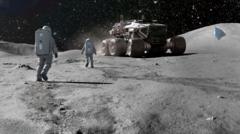
The moon harbors significant concentrations of Helium-3, embedded within lunar regolith across its surface. Over billions of years, solar wind particles carrying Helium-3 have bombarded the moon's unprotected surface, creating substantial deposits in the top few meters of lunar soil. Scientists estimate that the moon contains approximately one million metric tons of usable Helium-3, representing an enormous potential resource.
Unlike Earth's magnetic field, which deflects solar wind, the moon lacks planetary-scale magnetic protection. This geological difference has allowed Helium-3 accumulation far exceeding any terrestrial reserves. Advanced spectroscopic analysis and lunar sample studies have confirmed these theoretical projections, establishing the moon as an exceptionally rich repository for this valuable isotope.
The Economics of Helium-3 Extraction from Space
Current market valuations for Helium-3 extraction suggest prices reaching hundreds of thousands of dollars per kilogram, depending on purity specifications and application requirements. This extraordinary market value has motivated private aerospace companies and government space agencies to develop detailed plans for lunar resource extraction operations. Several organizations have already invested substantial capital into preliminary research and technological development.
The economic viability of Helium-3 extraction hinges on reducing transportation costs from the moon to Earth. Advances in reusable launch vehicle technology and in-situ resource utilization strategies are progressively making this scenario more feasible. Engineers estimate that processing even modest quantities of lunar regolith could yield quantities sufficient to sustain global fusion research facilities for extended periods.
Technological Challenges in Mining Operations
Extracting Helium-3 from lunar soil presents extraordinary technical obstacles requiring innovative solutions. Helium-3 exists in extremely low concentrations, necessitating processing of enormous volumes of regolith to obtain commercially viable quantities. Current extraction methodologies involve heating lunar soil to release trapped gas, followed by sophisticated separation and purification processes that must operate reliably in the harsh lunar environment.
The extreme temperature variations, radiation exposure, and abrasive dust characteristics of the moon demand equipment far more robust than terrestrial mining machinery. Researchers are developing specialized robotics and automated systems capable of sustained operation under these demanding conditions. Multiple technological breakthroughs in material science, energy systems, and automation will likely precede commercial-scale Helium-3 extraction operations.
Future Prospects for Helium-3 Extraction
Major space-faring nations and private organizations have incorporated Helium-3 extraction into their long-term strategic planning. Successful implementation would require establishing permanent lunar infrastructure, including power generation systems, processing facilities, and transportation mechanisms. These developments would simultaneously support broader goals of sustained human presence on the moon and broader space exploration initiatives.
The convergence of advancing fusion technology, increasing energy demands, and improved space access capabilities suggests that Helium-3 extraction may transition from theoretical concept to operational reality within the coming decades. This transformation would fundamentally reshape global energy markets and establish entirely new paradigms for resource utilization beyond Earth.


