
Hamas Disarmament Plan Offers Hope Despite Major Political Obstacles
Explore the complex challenges facing Hamas disarmament plans in Gaza, balancing hope against political realities and wartime complexities.
Understanding the Complex Path to Hamas Disarmament in Gaza
The Hamas disarmament plan represents a significant yet precarious effort to establish sustainable peace in one of the world's most volatile regions. While this initiative carries substantial potential for transformative change, it must navigate an exceptionally challenging landscape marked by decades of mistrust, military complexity, and the profound humanitarian consequences of ongoing conflict.
Political Realities Shaping Disarmament Negotiations
The political dimension of any Hamas disarmament plan presents unprecedented complications that extend far beyond simple weapons decommissioning. Multiple stakeholders hold divergent interests: regional powers pursue distinct strategic objectives, international bodies advocate for their respective positions, and local Palestinian and Israeli communities express competing visions for the future. This multilayered political environment creates friction points at every negotiation stage, requiring unprecedented diplomatic coordination and compromise.
Decades of Mistrust and Historical Precedent
Constructing genuine trust between parties with a history spanning generations of conflict remains extraordinarily difficult. Previous peace initiatives have faltered due to implementation failures and renewed violence. These historical precedents inform current negotiations, as both parties approach any agreement with justified skepticism. The memory of broken agreements and violated ceasefires shapes expectations and creates psychological barriers to genuine cooperation.
Military Obstacles to Successful Implementation
The military component of Hamas disarmament extends beyond theoretical frameworks into operational complexity. Gaza's terrain, infiltration networks, and distributed command structures create substantial verification challenges. A comprehensive disarmament framework must account for diverse weapon systems, clandestine supply routes, and organizational cells operating across fragmented territories. Military experts acknowledge that complete weapons elimination demands intrusive monitoring mechanisms that themselves become contentious issues in negotiations.
Verification and Trust-Building Mechanisms
Any functional disarmament plan requires robust verification protocols ensuring compliance. International observers, technological monitoring systems, and transparent reporting mechanisms face practical obstacles in Gaza's unique environment. Building confidence through verification requires mutual acceptance of inspection regimes that both parties historically resisted. These technical challenges intertwine with sovereignty concerns, as external monitoring raises questions about territorial authority and national independence.
Humanitarian Consequences and Collective Memory
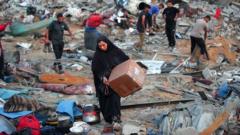
The devastating human toll of conflict directly impacts disarmament prospects. Thousands of civilian casualties, widespread destruction of infrastructure, and displacement of entire communities create psychological and practical impediments to reconciliation. Survivors and bereaved families harbor legitimate grievances that complicate rational negotiations. The humanitarian devastation requires simultaneous reconstruction efforts, adding resource pressures to peace processes already stretched thin by political demands.
Reconstruction initiatives themselves become negotiation variables. Which party assumes financial responsibility? How do resources distribute across affected populations? These questions transform disarmament from a security matter into a comprehensive social contract requiring economic cooperation that transcends military considerations.
The Cautious Promise of Hope
Despite formidable obstacles, the emerging Hamas disarmament plan offers noteworthy potential. It signals acknowledgment from multiple parties that indefinite conflict proves unsustainable and mutually destructive. International consensus supporting peace provides legitimacy and material resources previously unavailable. Younger generations within Palestinian society increasingly question endless military struggle, creating grassroots support for alternative approaches. External actors' coordinated diplomatic efforts provide unprecedented leverage and mediation capacity.
Conditions Enabling Successful Implementation
Success requires clear preconditions and staged implementation. Rather than demanding immediate comprehensive disarmament, phased approaches allow confidence-building at manageable intervals. Each stage's successful completion generates momentum for subsequent phases. International guarantees—military, economic, and political—address legitimate security concerns that otherwise prevent weapons relinquishment. Regional normalization initiatives involving neighboring states strengthen incentive structures encouraging compliance.
The Road Forward
Achieving substantive progress on any disarmament plan demands extraordinary patience, creative problem-solving, and genuine commitment from all stakeholders. The obstacles are real, substantial, and interconnected. Yet the alternatives—perpetual violence, generational trauma, and economic collapse—prove increasingly unacceptable to broadening constituencies. This convergence of necessity and emerging possibility, however fragile, creates a genuine opening for transformative change that seemed impossible years ago.


