
France's Climate Crisis: Air Conditioning Becomes Political Issue
France faces unprecedented heatwave after recording its hottest day, sparking national debate on air conditioning adoption and climate policy.
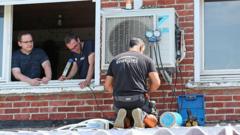
Record-Breaking Heat Transforms French Energy Debate
France is reassessing its traditional stance on air conditioning following the nation's most extreme temperature spike on record. The sudden emergence of air conditioning as a central political and social issue reflects deeper tensions between environmental sustainability and immediate comfort needs during climate emergencies.
The phenomenon of air conditioning becoming divisive in France reveals fundamental disagreements about how the country should respond to escalating climate challenges. Government officials, environmental advocates, and citizens find themselves at odds regarding the expansion of cooling technology infrastructure across residential and commercial spaces.
The Historical Context of French Cooling Resistance
Historically, France has lagged behind other developed nations in adopting widespread air conditioning systems. Cultural preferences, energy policies, and environmental concerns combined to create a national approach that favored natural ventilation and architectural design solutions over mechanical cooling.
This conservative approach to air conditioning contrasts sharply with Mediterranean countries and North American nations, where cooling systems are standard in most buildings. French policymakers previously argued that such infrastructure represented unnecessary energy consumption and contributed to carbon emissions.
Temperature Records Forcing Policy Reconsideration
The registration of France's highest temperature ever recorded has disrupted long-standing assumptions about climate stability. Cities and regions that never anticipated needing extensive cooling infrastructure now face urgent pressure to install such systems to protect vulnerable populations, particularly elderly residents and those with health conditions.
Emergency rooms reported increased admissions related to heat exhaustion during the extreme temperatures. Hospitals, care facilities, and public institutions struggled to maintain safe environments without adequate cooling capacity, highlighting the real consequences of inadequate preparation.
Environmental and Political Divisions
The air conditioning debate exposes rifts within French society regarding climate strategy priorities. Environmental organizations warn that expanding cooling systems will increase electricity demand significantly, potentially requiring greater reliance on energy sources that contradict France's carbon reduction commitments.
Supporters of rapid air conditioning expansion counter that immediate human health and safety must take precedence over theoretical environmental concerns. They argue that failing to provide cooling technology during extreme heat events places lives at risk and represents a public health failure.
Political parties have seized on the air conditioning question as representative of broader governance philosophies. Left-leaning environmentalists advocate for urban planning reforms and green infrastructure investments as cooling alternatives, while centrist and conservative politicians support pragmatic infrastructure expansion.
Economic Implications and Industrial Impact
The potential surge in air conditioning demand carries significant economic implications for French manufacturers and European cooling system suppliers. Companies specializing in HVAC technology anticipate substantial market growth if the government commits to widespread installation programs.
Construction and installation sectors would benefit from expanded cooling infrastructure projects, creating employment opportunities across multiple regions. However, operational costs for businesses and households would rise noticeably due to increased electricity consumption.
International Context and Comparative Analysis
France's struggle with air conditioning adoption reflects challenges other European nations face as climate patterns shift. Southern European countries already reliant on cooling systems offer limited insights, as their infrastructure evolved gradually over decades.
Northern European nations like Germany and Scandinavia similarly resisted widespread cooling adoption based on historical climate patterns. The simultaneous emergence of heat-related infrastructure needs across multiple countries suggests coordinated policy responses may emerge through European Union frameworks.
Future Outlook and Policy Prospects
The trajectory of France's air conditioning debate will influence how the nation balances environmental commitments with climate adaptation requirements. Government officials face mounting pressure to establish coherent policies addressing both immediate cooling needs and long-term sustainability goals.
Potential solutions under discussion include selective cooling system deployment prioritizing hospitals, schools, and public buildings rather than universal residential installation. Energy efficiency standards could mandate high-efficiency cooling systems using renewable electricity sources.
The record-breaking temperatures that sparked this political controversy demonstrate how climate change forces practical reconsideration of longstanding policies. France's resolution of the air conditioning question will likely shape European climate adaptation strategies for years to come.


