
Ford Brings Back Human Engineers After AI Quality Systems Underperform
Ford rehires experienced engineers as artificial intelligence quality checks fall short of veteran technician standards. Discover why human expertise remains irreplaceable.
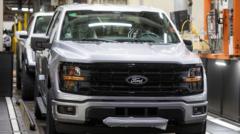
Ford Returns to Human Expertise as AI Quality Systems Prove Insufficient
Ford rehires human engineers after discovering that artificial intelligence quality systems cannot replicate the precision and skill of experienced technicians. The automotive manufacturer's recent decision marks a significant shift in manufacturing strategy, highlighting the critical importance of human expertise in maintaining production standards.
The company had implemented advanced AI-driven quality control systems to streamline its inspection processes and reduce operational costs. However, the technology failed to match the comprehensive evaluation capabilities that veteran engineers bring to the production line. This discovery prompted Ford to reintegrate experienced human inspectors into their quality assurance operations.
Why AI Quality Control Systems Fell Short
Artificial intelligence algorithms, while capable of identifying obvious defects and standardized anomalies, struggled with contextual decision-making that requires decades of accumulated knowledge. Ford's experienced technicians possess an intuitive understanding of subtle manufacturing irregularities that could indicate deeper production issues.
The human engineers Excel at recognizing patterns that artificial systems frequently overlooked. These professionals can assess components from multiple angles, consider environmental factors, and make nuanced judgments about whether a component meets acceptable standards or requires adjustment. Their expertise encompasses not just visual inspection but also understanding the relationship between various manufacturing parameters.
The Impact on Production Quality Standards
By reintegrating veteran inspectors, Ford strengthens its commitment to maintaining rigorous quality benchmarks across all vehicle lines. The company recognized that cutting costs through full automation came at the expense of reliability and customer satisfaction. Human engineers provide accountability and responsibility that machines cannot offer—they understand the broader implications of their quality decisions.
Quality control represents one of the most critical phases in automotive manufacturing. A single oversight in component inspection can cascade into significant safety issues, warranty claims, and damage to brand reputation. The human element brings contextual awareness and risk assessment capabilities that remain essential in this high-stakes environment.
Reimagining Human-AI Collaboration in Manufacturing
Rather than viewing this development as a failure of technology, industry experts recognize it as an important lesson in optimizing human-machine collaboration. The most effective approach combines AI efficiency with human judgment, creating a hybrid system that leverages the strengths of both.
Ford's strategy now incorporates artificial intelligence systems for initial screening and routine inspections, while reserving complex decision-making for experienced human engineers. This balanced approach maximizes efficiency without compromising quality. AI handles high-volume, repetitive scanning tasks, while humans focus on critical evaluations that require professional judgment.
The Broader Implications for the Automotive Industry
Ford's decision to rehire human engineers reflects broader industry recognition that manufacturing excellence requires both technological advancement and human expertise. Other automotive manufacturers are likely to reassess their own automation strategies in light of these findings.
The automotive sector continues evolving, but this development suggests that completely replacing human workers with artificial intelligence remains impractical for quality-critical applications. Experienced technicians represent irreplaceable assets whose skill sets have been refined through years of hands-on experience.
Moving Forward with Enhanced Manufacturing Protocols
Ford commits to developing more sophisticated training programs for engineers returning to quality assurance roles. The company recognizes that modern manufacturing requires professionals who understand both traditional inspection techniques and contemporary technology platforms.
Future quality control systems will integrate feedback mechanisms where human inspectors train artificial intelligence algorithms, helping machines learn from expert judgment. This collaborative approach creates continuous improvement in automated systems while maintaining human oversight of critical manufacturing decisions.
The reinstatement of experienced engineers demonstrates that sustainable manufacturing excellence depends on respecting the irreplaceable value of human expertise, even in an increasingly automated world.


