Farage: No One Else Can Lead Reform UK Party
Nigel Farage claims no suitable alternative leader exists for Reform UK, warning rivals as he commits to leading the next election.
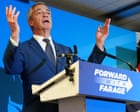
Farage Reaffirms His Exclusive Leadership Position at Reform UK
Nigel Farage, the prominent political figure spearheading Reform UK, has made unequivocal statements suggesting that he remains the indispensable leader of his party. During recent public comments, Farage declared that he cannot identify any viable alternative to himself within the Reform UK ranks who possesses the capability to fulfill the demanding role of party leader. This declaration serves as a preemptive response to any internal faction considering a potential leadership challenge, effectively signaling his unwavering commitment to maintaining control of the organization.
The Reform UK leader's assertive positioning reflects a broader strategy to consolidate his authority within the party structure. By publicly stating that Nigel Farage sees no suitable replacement, he effectively dismisses speculation about succession planning or internal power struggles. This tactical communication underscores his confidence in his leadership abilities and his perceived irreplaceability within the political movement he founded and continues to direct.
Election Commitment and Future Plans
Farage has explicitly confirmed his intention to contest the forthcoming electoral cycle as the leader of Reform UK, provided specific personal circumstances remain favorable. During his public statements, he indicated that he would lead the party into the next election if he is "still here and fit and healthy," a conditional commitment that acknowledges the unpredictability of political life while reinforcing his current dedication to the cause.
This election-focused pledge demonstrates Farage's strategic vision for Reform UK's future. Rather than focusing on immediate internal succession planning, he has prioritized the electoral objectives that could reshape the British political landscape. His determination to personally lead the party through this critical election cycle suggests his belief that his continued presence is essential to achieving Reform UK's political ambitions and mobilizing the electoral coalition that supports the party's agenda.
Security Concerns and Personal Safety Implications
Despite maintaining a resolute public stance regarding his leadership position, Farage has acknowledged genuine concerns about personal safety that have emerged within the political environment. These worries were particularly intensified following a tragic incident involving Ann Widdecombe, a prominent politician associated with Reform UK. The reference to this serious matter underscores the volatile atmosphere surrounding contemporary British politics.
The Reform UK leader's willingness to address security concerns demonstrates a measured recognition of real-world risks facing political figures today. Nevertheless, Farage's decision to reaffirm his leadership commitment in light of these challenges reflects his determination not to be deterred by external threats or intimidation. This stance positions him as a principled leader willing to continue his political work despite acknowledging legitimate personal safety considerations.
Strategic Message to Internal Opponents
Farage's public pronouncements function simultaneously as a warning to any internal party members who might harbor aspirations of replacing him as leader. By categorically stating that he perceives no suitable alternative within Reform UK, he effectively preempts internal challenges before they materialize. This prophylactic communication strategy aims to discourage potential rivals from mounting formal leadership challenges that could destabilize the organization.
The political calculation behind these statements reveals Farage's sophisticated understanding of party management and leadership dynamics. Rather than engaging in defensive posturing, he takes an offensive approach by declaring his irreplaceability, thereby establishing a clear hierarchy and demonstrating confidence in his continued leadership. This approach serves to intimidate potential challengers while simultaneously reassuring party members and supporters that the organization remains under stable, experienced guidance.
Reform UK's Direction and Leadership Future
Looking ahead, the trajectory of Reform UK appears firmly anchored to Farage's continued leadership. His explicit statements regarding the absence of suitable alternatives suggest that the party's organizational structure and decision-making processes remain highly centralized around his leadership persona. This concentration of authority has characterized Reform UK since its inception and shows no signs of dispersing in the near term.
The implications of Farage's pronouncements extend beyond mere leadership succession planning. His reaffirmation of commitment to leading Reform UK through the next election signals his determination to position the party as a consequential force in British politics. By eliminating speculation about internal transitions and establishing his unchallenged authority, Farage creates the conditions necessary for the party to focus on external political competition rather than internal organizational struggles.
Conclusion
Nigel Farage's categorical assertion that no other Reform UK member possesses the suitable qualifications to lead the party represents a defining moment for the organization. His simultaneous commitment to leading the upcoming election, contingent upon maintaining his health and safety, establishes clear expectations for the party's immediate future. These statements collectively reinforce Farage's position as the essential leader of Reform UK while simultaneously warning potential internal rivals that challenging his authority would prove futile given the perceived absence of viable alternatives.