
Exploring Five Essential Scenes From the Bayeux Tapestry's Historical Narrative
Discover the five pivotal scenes from the Bayeux Tapestry that reveal William the Conqueror's epic struggle against King Harold for England's throne in 1066.
Understanding the Bayeux Tapestry's Historical Significance
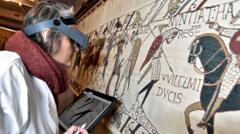
The Bayeux Tapestry stands as one of the most remarkable historical documents of medieval times, meticulously chronicling the dramatic conflict between William the Conqueror and King Harold. This extraordinary 11th-century textile masterpiece spans approximately 70 meters in length and contains detailed embroidered scenes that narrate the tumultuous journey toward the Norman Conquest of England. The tapestry's depiction of these crucial events provides invaluable insights into the political turmoil and military strategies that shaped medieval Europe.
The First Scene: Harold's Oath at Normandy
The initial sequence of the Bayeux Tapestry introduces viewers to Harold Godwinson, the Anglo-Saxon nobleman who would eventually become King of England. This opening section reveals Harold's journey to Normandy, where he encounters William the Conqueror at the ducal court. During this diplomatic encounter, Harold makes a solemn oath before a sacred altar, swearing allegiance to William's claim to the English throne. This pivotal moment represents a critical turning point in the narrative, establishing the tension that would drive the entire conflict between these two powerful figures and their respective claims to England's crown.
The Second Scene: William's Military Preparations
Following Harold's oath, the tapestry illustrates William the Conqueror's methodical preparations for invasion. This scene captures the Duke of Normandy mustering his forces, gathering ships, and assembling resources necessary for a military campaign across the English Channel. The embroidered depictions showcase medieval craftsmanship at its finest, revealing wooden vessels under construction and soldiers being organized into military formations. These images document the extraordinary logistics required to mount an invasion during the 11th century, demonstrating how William orchestrated one of history's most consequential military operations to claim his disputed inheritance.
The Third Scene: Halley's Comet and Omens
One of the most visually striking sections of the Bayeux Tapestry depicts the appearance of a celestial phenomenon in 1066—Halley's Comet streaking across the medieval sky. According to the chroniclers who embroidered this scene, this astronomical event was interpreted as an omen foreshadowing momentous change. King Harold observes this cosmic occurrence with evident concern, while nobles and advisors react with alarm at what they perceive as a supernatural warning. This artistic representation reveals how medieval people understood astronomical phenomena as divine messages, and how such signs influenced their interpretations of political and military events that were about to unfold.
The Fourth Scene: The Battle of Hastings Commences
The climactic sequences of the Bayeux Tapestry focus intensely on the Battle of Hastings itself, where William the Conqueror and King Harold finally met in direct military confrontation on October 14, 1066. This crucial scene depicts the Norman cavalry charging against English shield walls, archers unleashing volleys of arrows, and hand-to-hand combat between soldiers of both armies. The embroidered artwork captures the chaos and violence of medieval warfare with remarkable detail, showing fallen soldiers, wounded horses, and the desperate struggle for supremacy. King Harold's forces initially held strong defensive positions on elevated ground, but the sustained Norman assault gradually wore down their resistance throughout the brutal day-long engagement.
The Fifth Scene: The Decisive Victory and Its Aftermath
The final significant scene depicted in the Bayeux Tapestry shows the conclusion of the Battle of Hastings and the death of King Harold. Though the tapestry's ending is incomplete, historical accounts indicate that Harold fell during the battle's final hours, struck down either by a Norman arrow or by William's own hand in the chaos of combat. With Harold's death, English resistance crumbled, and William the Conqueror secured his claim to the throne. This dramatic conclusion transformed medieval political history, establishing Norman rule over England and fundamentally altering the cultural, linguistic, and social fabric of the English kingdom for generations to come.
The Broader Historical Context of the Bayeux Tapestry
Beyond these five pivotal scenes, the Bayeux Tapestry functions as a comprehensive visual chronicle of one of history's most significant military campaigns. Commissioned in the years following the Norman victory, the tapestry served multiple purposes: it commemorated William the Conqueror's triumph, justified his claim to the English throne, and preserved detailed visual records of 11th-century warfare and society. The embroidered narrative demonstrates how King Harold's initial oath made to William, combined with his subsequent refusal to honor that pledge and his acceptance of England's crown, set in motion events that would reshape medieval Europe. The Bayeux Tapestry remains an invaluable primary source for understanding this transformative historical period.
Legacy and Modern Significance of the Bayeux Tapestry
Today, the Bayeux Tapestry continues to captivate historians, scholars, and visitors from around the globe. Its detailed scenes provide unparalleled visual documentation of medieval life, warfare tactics, clothing, and political intrigue during the crucial year of 1066. The conflict between William the Conqueror and King Harold, as depicted in this remarkable textile, illustrates timeless themes of ambition, betrayal, military strategy, and the profound consequences of single moments that alter historical trajectories. The preservation and study of the Bayeux Tapestry ensure that future generations can continue to appreciate and learn from this extraordinary window into medieval history and the transformative events that shaped modern England.


