
British Airways Flight Issues Mayday: Passenger Recalls Terrifying Moments
Passenger Edward Killiwick describes fear during British Airways mayday call that ended safely at Heathrow. Read his account of the distress emergency.
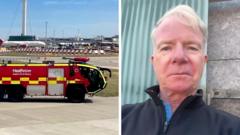
Passenger Witnesses British Airways Mayday Flight Drama
A passenger aboard the British Airways aircraft that issued a mayday distress call has provided a firsthand account of the frightening moments experienced during the emergency. The British Airways mayday flight, which successfully landed at London Heathrow Airport earlier this month, became the subject of intense scrutiny after passengers revealed the alarming circumstances surrounding the incident.
Edward Killiwick, who was traveling on the affected flight, has broken his silence about the harrowing experience. His testimony provides crucial insight into what passengers endured as the aircraft encountered a serious problem that prompted the crew to declare an emergency situation.
The Moment of Crisis During the Flight
According to Killiwick's account, fear gripped many travelers as the situation unfolded aboard the aircraft. The passenger described the atmosphere becoming increasingly tense as crew members began their emergency procedures. Among the reactions captured during those critical moments was an audible cry of "I don't want to die" from someone aboard the vessel, underscoring the genuine terror that permeated the cabin.
The British Airways mayday flight initiated contact with air traffic control to declare a formal distress emergency, triggering immediate response protocols at Heathrow. This dramatic declaration signaled that the aircraft required priority handling and emergency landing procedures.
Emergency Response and Safe Landing
Despite the gravity of the situation, the flight crew's swift action and expertise ensured a successful resolution. The aircraft made its descent toward Heathrow Airport with emergency services standing ready on the ground. The British Airways mayday flight ultimately touched down safely, preventing what could have been a catastrophic outcome.
Emergency vehicles lined the runway as a precautionary measure, demonstrating the serious nature of the distress call. However, all passengers and crew members disembarked safely from the aircraft following the emergency landing.
Passenger Experience and Emotional Impact
Killiwick's recollection highlights the psychological toll such events exact on those aboard. The uncertainty surrounding the aircraft's condition, combined with the visible concern of flight attendants and crew members, created an environment of acute anxiety throughout the cabin.
Many passengers on the British Airways mayday flight reported that they had no initial understanding of the severity of the problem. The lack of detailed communication during the emergency phase left travelers to interpret circumstances based on limited information and atmospheric cues, intensifying their sense of dread.
Investigation and Safety Protocol Confirmation
The incident involving the British Airways mayday flight has prompted investigations into the technical issue that necessitated the emergency declaration. Aviation authorities have launched inquiries to determine the root cause and assess whether all safety protocols functioned as intended.
British Airways released statements confirming their commitment to passenger safety and their crew's professional response during the emergency. The airline emphasized that the aircraft underwent comprehensive inspections and that safety measures operated according to established procedures.
Broader Context of Aviation Safety
While the British Airways mayday flight incident was resolved successfully, it serves as a reminder of the rigorous safety standards and training that govern commercial aviation. Pilots, flight attendants, and ground crews undergo extensive preparation specifically for emergency scenarios.
Mayday declarations, while serious, represent one component of a comprehensive safety system designed to protect aircraft occupants. The successful resolution of this incident exemplifies how modern aviation safety protocols function effectively under pressure.
Killiwick's willingness to share his experience contributes to public understanding of aircraft emergencies and the human dimension of aviation incidents. His account, while undoubtedly frightening, ultimately demonstrates the effectiveness of coordinated emergency response procedures that kept all persons aboard safe.


