
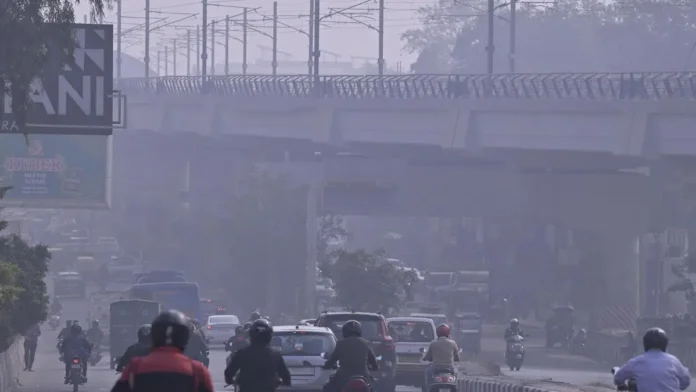
The Central Pollution Control Board (CPCB) has recently announced a major revision in the Graded Response Action Plan (GRAP) for the entire National Capital Region (NCR) on November 21. This move by the Central Air Quality Management (CAQM) is a significant step towards tackling the alarming levels of air pollution in the region. The revised GRAP has brought about some crucial changes, with certain measures previously listed under Stage IV being shifted to the Stage III guidelines.
The GRAP was first introduced in 2017 to combat the deteriorating air quality in the NCR. It is a comprehensive action plan that outlines various measures to be taken at different levels of air pollution. The plan is implemented in a graded manner, with different stages being activated depending on the severity of the air pollution levels. The aim of the GRAP is to reduce air pollution and protect the health of citizens by implementing timely and effective measures.
Under the revised GRAP, the measures listed under Stage IV, which were previously activated when the Air Quality Index (AQI) crossed 500, have now been shifted to Stage III. This means that these measures will now be implemented when the AQI reaches 400, which is considered to be in the ‘severe’ category. These measures include a ban on construction activities, closure of brick kilns and hot mix plants, and a restriction on the entry of trucks into the city. This move is expected to bring about a significant reduction in air pollution levels, as these measures will now be implemented at an earlier stage.
The decision to revise the GRAP was taken after a thorough review of the current air pollution situation in the NCR. The CAQM, along with various stakeholders, analyzed the data and concluded that the existing measures were not enough to tackle the severity of air pollution in the region. The revised GRAP is a result of this analysis and is expected to bring about a positive change in the air quality of the NCR.
The shift of certain measures from Stage IV to Stage III is a welcome move and has been applauded by environmentalists and citizens alike. This decision is a clear indication of the government’s commitment to tackle the issue of air pollution in the NCR. It also reflects the proactive approach of the authorities in addressing the problem and taking necessary steps to protect the health of citizens.
The revised GRAP also includes some new measures that will be implemented at different stages of air pollution. These measures include a ban on diesel generators, a restriction on the use of private vehicles, and a temporary closure of industries. These measures will be implemented in a phased manner, depending on the severity of air pollution levels. This shows that the authorities are constantly monitoring the situation and are ready to take necessary actions to improve the air quality in the NCR.
The revised GRAP is a step in the right direction, but it is not a solution to the problem of air pollution. It is a comprehensive plan that needs to be implemented effectively and consistently to bring about a significant change in the air quality of the NCR. The success of the GRAP depends on the cooperation and participation of all stakeholders, including citizens, industries, and government agencies.
In conclusion, the revision of the GRAP by the CAQM is a positive development in the fight against air pollution in the NCR. The shift of certain measures from Stage IV to Stage III is a significant step towards reducing air pollution levels. The revised plan, along with the cooperation of all stakeholders, is expected to bring about a positive change in the air quality of the NCR. It is now up to all of us to work together and ensure that the revised GRAP is implemented effectively to make the NCR a cleaner and healthier place to live in.