
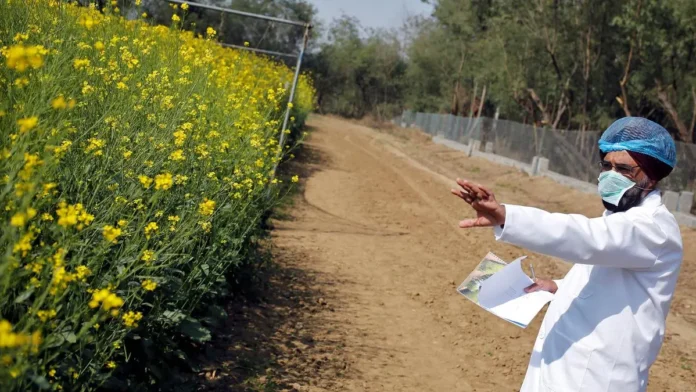
The recent ruling by the Indian government to reject the import of genetically modified (GM) soybeans and corn from the United States has caused a stir in the Indo-US trade talks. This decision has put a spanner in the works for Washington, which has been seeking market access for its GM crops in India. The move has raised concerns about the future of trade relations between the two countries and has left many wondering about the implications of this decision.
The ruling, which was announced by India’s Ministry of Environment, Forest and Climate Change, stated that the import of GM soybeans and corn would not be allowed without the approval of the Genetic Engineering Appraisal Committee (GEAC). This decision has been met with disappointment by the US, which has been pushing for greater market access for its GM crops in India.
The US has been a major exporter of GM soybeans and corn, and it sees India as a potential market for its products. However, the Indian government’s decision to reject the import of these crops has dealt a blow to the US’s hopes of expanding its market in India. This ruling has also raised concerns about the future of the Indo-US trade talks, which have been ongoing for some time now.
The US has been seeking greater market access for its GM crops in India, citing the benefits of these crops in terms of increased productivity and reduced costs for farmers. However, the Indian government has been cautious about allowing the import of GM crops, citing concerns about their impact on the environment and human health. This has been a major point of contention in the trade talks between the two countries.
The ruling by the Indian government has been welcomed by environmentalists and farmers’ groups, who have been raising concerns about the potential risks of GM crops. They have argued that the long-term effects of these crops on the environment and human health are still unknown, and therefore, it is important to exercise caution before allowing their import.
The decision by the Indian government is a positive step towards protecting the interests of Indian farmers and the environment. It shows that the government is committed to ensuring the safety and well-being of its citizens. The ruling also sends a strong message to the US that India will not compromise on its stance on GM crops, and that any trade agreement must take into consideration the concerns of Indian farmers and environmentalists.
Moreover, this decision by the Indian government is in line with the country’s commitment to sustainable agriculture and preserving its rich biodiversity. India has a diverse agricultural landscape, and the government has been promoting traditional and organic farming practices to ensure the long-term sustainability of its agriculture sector. Allowing the import of GM crops would have gone against this commitment and could have had serious consequences for the country’s agriculture and environment.
The ruling by the Indian government also highlights the need for a more balanced and fair trade agreement between the two countries. The US has been pushing for greater market access for its GM crops, but it is important to remember that India also has its own agricultural products that it wants to protect. Any trade agreement must take into consideration the interests of both countries and should not be one-sided.
In conclusion, the ruling by the Indian government to reject the import of GM soybeans and corn from the US is a positive step towards protecting the interests of Indian farmers and the environment. It sends a strong message to the US that India will not compromise on its stance on GM crops and that any trade agreement must be fair and balanced. This decision may have put a spanner in the Indo-US trade talks, but it also opens up opportunities for both countries to find a mutually beneficial solution that takes into consideration the concerns of all stakeholders.