
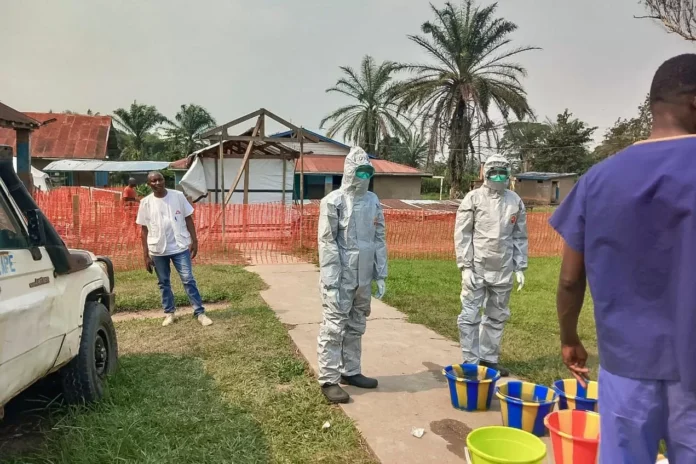
Health authorities in the Democratic Republic of Congo (DRC) are facing a new challenge as they work to contain a resurgent Ebola outbreak in the central Kasai province. The outbreak, which was declared on June 1st, has already claimed the lives of 42 people out of 64 confirmed cases. This is a concerning development for a country that has already been struggling with the ongoing COVID-19 pandemic.
The Ebola virus, which causes a severe and often fatal illness, was first discovered in the DRC in 1976. Since then, the country has experienced several outbreaks, with the most recent one occurring in 2018. The current outbreak in Kasai is the 12th recorded in the country and is believed to have started in the remote village of Ikoko Impenge.
The World Health Organization (WHO) and other international partners have been working closely with the DRC’s Ministry of Health to respond to the outbreak. The swift response and coordination between local and international health authorities have been crucial in containing the spread of the virus. The WHO has already deployed a team of experts to the affected area to provide technical support and assist with surveillance, contact tracing, and treatment.
One of the main challenges in responding to this outbreak is the remote and isolated location of the affected area. The village of Ikoko Impenge is located in a densely forested region, making it difficult for health workers to reach and provide medical assistance. However, the WHO and its partners have been working tirelessly to establish mobile laboratories and treatment centers in the area to ensure that those affected receive the necessary care.
Another concern is the potential spread of the virus to neighboring provinces and countries. The DRC shares borders with nine countries, and the Kasai province is located near the border with Angola. To prevent the spread of the virus, the WHO has implemented strict border control measures and is working with neighboring countries to strengthen their preparedness and response capacities.
The DRC’s Ministry of Health has also taken proactive measures to contain the outbreak, including the deployment of rapid response teams and the establishment of an Ebola treatment center in the affected area. The ministry has also launched an awareness campaign to educate the local population on how to prevent the spread of the virus and to encourage them to seek medical help if they experience any symptoms.
Despite the challenges, there is hope that this outbreak can be contained. The DRC has a wealth of experience in responding to Ebola outbreaks, and the lessons learned from previous outbreaks have been crucial in the current response efforts. The country has also successfully contained the 2018 outbreak, which was the second-largest in history, with the help of international partners.
Moreover, the development of an Ebola vaccine has been a game-changer in the fight against the virus. The vaccine, which was first used during the 2018 outbreak, has been proven to be highly effective in preventing the spread of the virus. The WHO has already shipped 6,000 doses of the vaccine to the DRC and is working to secure more doses to protect those at risk.
In conclusion, the resurgent Ebola outbreak in the DRC’s Kasai province is a cause for concern, but it is not a cause for panic. The swift response and collaboration between local and international health authorities have been crucial in containing the spread of the virus. With the lessons learned from previous outbreaks and the availability of an effective vaccine, there is hope that this outbreak can be contained and brought under control. The DRC and its partners are determined to overcome this challenge and protect the health and well-being of its citizens.