
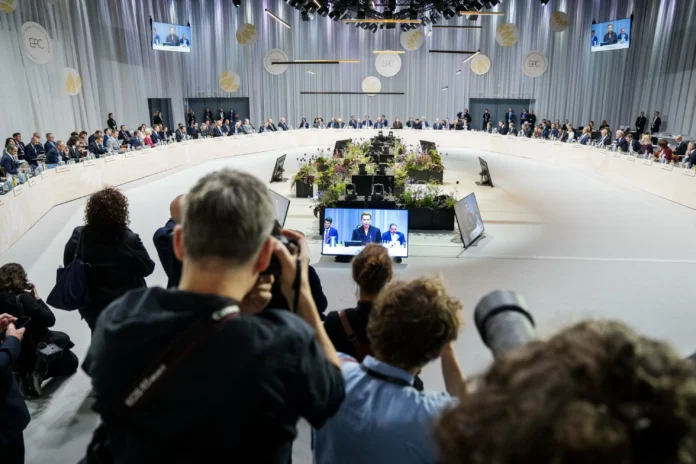
In a recent development, many European Union leaders have expressed their support for the idea of using frozen Russian assets to provide a reparations loan to Ukraine. This move has been welcomed by many as a step towards helping Ukraine rebuild its economy and infrastructure, which have been severely affected by the ongoing conflict with Russia.
The proposal to use frozen Russian assets as a means to provide financial aid to Ukraine was put forward by the Ukrainian government. The idea is to use the billions of euros of frozen Russian assets, which have been imposed as sanctions by the EU, to provide a much-needed boost to the Ukrainian economy. This would not only help Ukraine in its efforts to recover from the damages caused by the conflict but also send a strong message to Russia that its actions will not go unpunished.
The EU leaders, while expressing their support for this proposal, have also shown caution and wariness towards the matter. This is understandable, given the delicate political and economic situation in the region. However, it is heartening to see that the EU leaders are willing to take concrete steps towards helping Ukraine in its time of need.
One of the main concerns of the EU leaders is the potential backlash from Russia. It is no secret that Russia has been vehemently opposed to any form of sanctions imposed on them by the EU. However, it is important to note that the frozen assets belong to the Russian government and not its people. Therefore, using these assets to provide a reparations loan to Ukraine would not be an act of aggression towards the Russian people, but rather a means to hold their government accountable for its actions.
Moreover, the EU leaders have also expressed their concerns about the legal implications of using frozen assets for this purpose. However, it is worth noting that the EU has already taken similar measures in the past. In 2011, the EU used frozen Libyan assets to provide financial aid to the Libyan people during the civil war. This move was widely supported and praised by the international community. Therefore, using frozen Russian assets for the benefit of Ukraine would not be a new or unprecedented action.
The proposal to use frozen Russian assets as a reparations loan to Ukraine has also received support from the International Monetary Fund (IMF). The IMF has stated that it is willing to provide financial assistance to Ukraine, but only if the country can demonstrate that it has the ability to repay the loan. This is where the frozen assets come into play. By using these assets as collateral, Ukraine can secure the much-needed financial aid from the IMF and other international organizations.
It is also important to note that the conflict in Ukraine has not only caused economic damages but has also resulted in a humanitarian crisis. The people of Ukraine have been suffering for far too long, and it is time for the international community to step in and provide the necessary support. The proposal to use frozen Russian assets as a reparations loan is a step in the right direction towards addressing the humanitarian crisis in Ukraine.
In conclusion, the idea of using frozen Russian assets to provide a reparations loan to Ukraine has received widespread support from the EU leaders. While there are concerns and challenges that need to be addressed, this proposal has the potential to provide much-needed financial aid to Ukraine and hold Russia accountable for its actions. It is a positive and proactive step towards helping Ukraine rebuild and move towards a brighter future. The EU leaders must continue to work together and find a solution that benefits both Ukraine and the region as a whole.

