
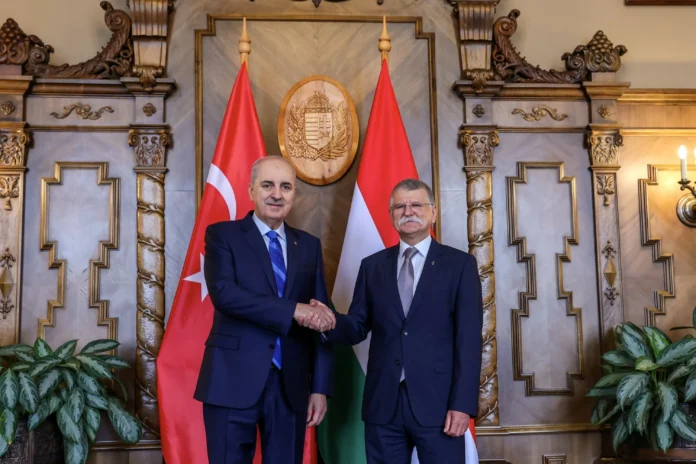
Turkish Parliament Speaker Numan Kurtulmuş recently emphasized the importance of Türkiye’s full membership in the European Union (EU), stating that it would not only benefit Türkiye, but also contribute to Europe’s institutional identity. This statement was made during a meeting with EU officials, where Kurtulmuş highlighted the strong ties between Türkiye and the EU and the potential for further cooperation.
Kurtulmuş’s words come at a crucial time for Türkiye, as the country has been working towards EU membership for several decades. Türkiye first applied for membership in 1987 and has since made significant progress in aligning its laws and regulations with EU standards. However, the process has been slow and has faced numerous challenges, leading to some skepticism about Türkiye’s chances of joining the EU.
Despite these challenges, Kurtulmuş remains optimistic and believes that Türkiye’s full membership in the EU would not only benefit the country but also contribute to Europe’s institutional identity. He stressed that Türkiye’s unique geographical location, as a bridge between Europe and Asia, makes it a valuable partner for the EU in terms of trade, security, and cultural exchange.
One of the main benefits of Türkiye’s EU membership would be the economic opportunities it would bring. The EU is Türkiye’s largest trading partner, with over half of Türkiye’s exports going to EU countries. By becoming a full member, Türkiye would have access to the EU’s single market, which would open up new opportunities for trade and investment. This would not only boost Türkiye’s economy but also contribute to the EU’s economic growth.
Moreover, Türkiye’s membership in the EU would also strengthen the EU’s security. As a NATO member and a key player in the fight against terrorism, Türkiye has been a reliable partner for the EU in maintaining regional stability. By becoming a full member, Türkiye would have a stronger voice in EU decision-making processes, allowing for more effective cooperation in addressing security challenges.
In addition to economic and security benefits, Türkiye’s EU membership would also have a positive impact on the EU’s institutional identity. The EU has been facing internal challenges in recent years, and Türkiye’s membership would bring a new perspective and diversity to the union. Türkiye’s rich history, culture, and traditions would add to the EU’s cultural diversity and contribute to a stronger sense of European identity.
Kurtulmuş also highlighted the progress Türkiye has made in aligning its laws and regulations with EU standards, stating that Türkiye is ready to take on the responsibilities of EU membership. He emphasized that Türkiye has made significant reforms in areas such as human rights, democracy, and the rule of law, which are essential values of the EU.
Furthermore, Kurtulmuş stressed that Türkiye’s EU membership would also benefit the EU in terms of its foreign policy. Türkiye has been a key player in the region, promoting stability and peace in the Middle East and the Balkans. As an EU member, Türkiye would have a stronger voice in shaping the EU’s foreign policy and contribute to the EU’s efforts in promoting peace and stability in the region.
In conclusion, Kurtulmuş’s statement highlights the strong ties between Türkiye and the EU and the potential for further cooperation. Türkiye’s full membership in the EU would not only benefit the country but also contribute to Europe’s institutional identity. It would bring economic opportunities, strengthen security, and add to the EU’s cultural diversity. With Türkiye’s readiness and commitment to EU values, it is time for the EU to recognize the potential of Türkiye’s membership and work towards making it a reality.