
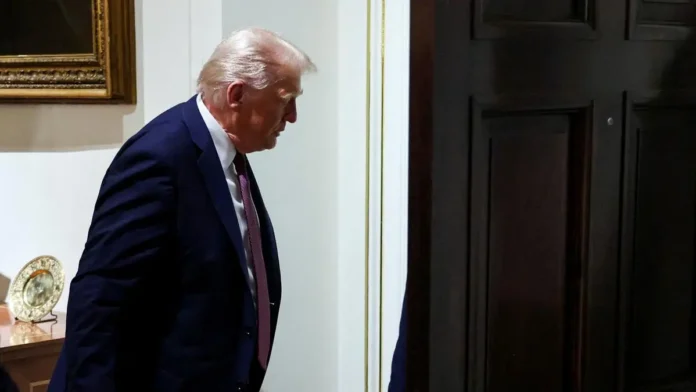
In a recent ruling, the World Trade Organization (WTO) has declared that the tariffs imposed by the United States on Chinese goods are in violation of international trade rules. This decision has sparked a heated debate, with President Donald Trump denouncing the ruling and his administration defending the tariffs as necessary for national security and trade leverage.
President Trump has been a vocal advocate for imposing tariffs on Chinese goods, arguing that it will protect American industries and jobs. However, the WTO has now ruled that these tariffs are not in line with international trade rules and have caused harm to the Chinese economy. In response, President Trump has warned of “financial ruin” if the ruling stands, claiming that the tariffs are crucial for the country’s economic well-being.
The Trump administration has also argued that the tariffs are necessary for national security, as they aim to reduce the trade deficit with China and protect American industries from unfair competition. They have also stated that the tariffs serve as a bargaining tool in trade negotiations with China, giving the US more leverage in the ongoing trade war between the two countries.
However, the WTO’s ruling has raised concerns about the impact of these tariffs on the global economy. Many experts believe that the tariffs have not only harmed the Chinese economy but have also caused disruptions in global supply chains and increased prices for American consumers. This has led to criticism of the Trump administration’s trade policies and calls for a more diplomatic approach to resolving trade disputes.
Despite the backlash, President Trump remains steadfast in his belief that the tariffs are necessary for the country’s economic prosperity. He has vowed to continue fighting against the WTO’s ruling and has even threatened to withdraw the US from the organization. This has raised concerns about the potential consequences of such a move and the impact it could have on the global trade landscape.
While the debate over the tariffs continues, it is important to remember that the ultimate goal is to create a fair and balanced trading system that benefits all countries. The WTO’s ruling serves as a reminder that international trade rules must be respected and followed by all nations. It also highlights the need for open and constructive dialogue between countries to resolve trade disputes and avoid further escalation.
In the midst of this controversy, it is crucial for the US to maintain its strong economic position and continue to promote fair trade practices. The country’s economy has been thriving under the Trump administration, with low unemployment rates and a booming stock market. It is important to ensure that these tariffs do not have a negative impact on the country’s economic growth and stability.
In conclusion, the WTO’s ruling on the US tariffs on Chinese goods has sparked a heated debate, with President Trump denouncing the decision and his administration defending the tariffs as necessary for national security and trade leverage. While the debate continues, it is important for all parties to work towards finding a mutually beneficial solution that promotes fair trade practices and benefits the global economy. The US must also continue to prioritize its economic growth and stability while navigating these trade disputes.

