
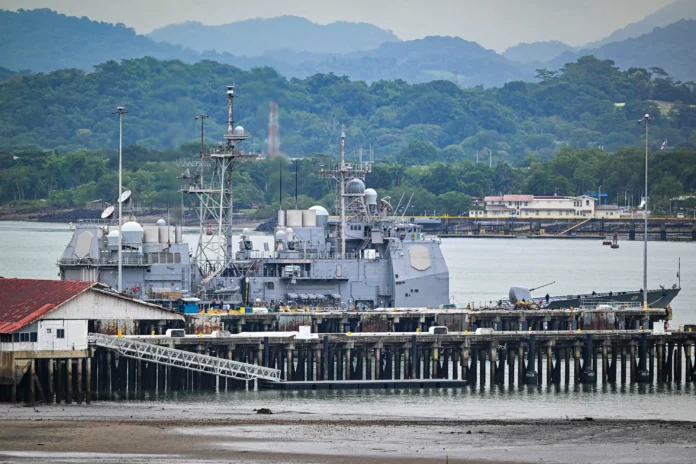
Tensions are rising between the United States and Venezuela as the US increases its naval presence in the southern Caribbean and surrounding waters. This move comes as Washington cites threats from Latin American countries, particularly Venezuela, as the reason for its actions.
The United States has been closely monitoring the situation in Venezuela for some time now. The country has been facing a political and economic crisis, which has led to widespread unrest and instability. The US has been vocal in its criticism of the Venezuelan government and has imposed sanctions on the country in an attempt to pressure the government to make changes.
However, the recent escalation of tensions between the two nations has raised concerns among the international community. The US has deployed warships and surveillance aircraft to the region, citing intelligence reports that suggest Venezuela is involved in drug trafficking and other illicit activities.
This move has been met with strong opposition from the Venezuelan government, which sees it as a direct threat to its sovereignty. Venezuelan President Nicolas Maduro has accused the US of trying to orchestrate a military intervention in his country, and has called for international support to defend against what he calls “imperialist aggression.”
The US has denied any intention of military intervention and has stated that its increased naval presence is solely for the purpose of countering the alleged threats posed by Venezuela. However, this explanation has not been enough to ease tensions between the two nations.
The situation has also sparked concerns among neighboring countries in the region. Many Latin American countries have expressed their support for Venezuela and have called for a peaceful resolution to the conflict. They fear that any military action by the US could have serious consequences for the stability of the region.
In response to the US’s actions, Venezuela has also increased its military presence in the region. The country has conducted military exercises and has deployed its own warships to monitor the movements of the US navy. This has only added to the already tense situation and has raised fears of a potential military confrontation between the two nations.
The escalation of tensions between the US and Venezuela is a cause for concern for the international community. It is imperative that both nations engage in dialogue and find a peaceful resolution to their differences. The US must also be mindful of the potential consequences of its actions and refrain from any actions that could further destabilize the region.
It is also important for the international community to play a role in de-escalating the situation. Diplomatic efforts must be made to bring both parties to the negotiating table and find a peaceful solution. The United Nations and other international organizations have a responsibility to mediate and facilitate dialogue between the US and Venezuela in order to prevent any further escalation of tensions.
In the midst of this tense situation, it is important to remember the impact it has on the people of Venezuela. The country is already facing a humanitarian crisis, with shortages of food, medicine, and basic necessities. The escalation of tensions with the US will only worsen the situation for the Venezuelan people, who are already suffering.
In conclusion, the mounting tensions between the US and Venezuela are a cause for concern for the international community. It is crucial for both nations to engage in dialogue and find a peaceful resolution to their differences. The US must also be mindful of the potential consequences of its actions and the impact it has on the people of Venezuela. It is our hope that through diplomatic efforts and international mediation, a peaceful solution can be reached and stability can be restored in the region.