
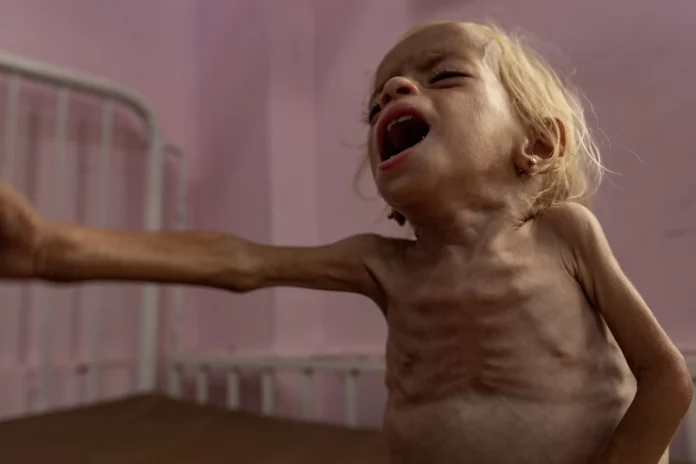
The Gaza Strip, a small Palestinian territory nestled between Israel and Egypt, has long been a region plagued by conflict and instability. However, the recent surge in malnourished children within the impoverished enclave has caught the attention of the world.
According to the United Nations, the number of malnourished children in the Gaza Strip has tripled since March, a staggering increase that is deeply concerning. This alarming statistic is a direct result of the months-long blockade enforced by Israel, which has pushed the enclave deeper into poverty and hunger.
The blockade, which has been in place since 2007, has severely limited the flow of goods and services into Gaza, leaving its citizens in a state of constant struggle. Basic necessities such as food, medicine, and clean water have become scarce, putting the lives of innocent children at risk.
The situation in Gaza has been further exacerbated by the ongoing political tensions between Israel and Palestine. The recent violence and clashes at the border have only worsened the already dire situation for the people of Gaza, particularly its most vulnerable – the children.
The UN report paints a grim picture of the current state of affairs in Gaza. It reveals that over 68,000 children under the age of five are suffering from acute malnutrition, while more than 113,000 are at risk of becoming malnourished. This represents a humanitarian crisis of unprecedented proportions and cannot be ignored.
Malnutrition has a detrimental impact on children, not only physically but also mentally. It weakens their immune system, making them more susceptible to diseases and infections. It also affects their cognitive development, hindering their ability to learn and grow. These long-term effects of malnutrition can have a significant impact on a child’s future, depriving them of their right to lead a healthy and prosperous life.
The international community must come together to address this pressing issue in Gaza. We cannot turn a blind eye to the suffering of innocent children. They deserve a chance at a better life, a life where they are not plagued by hunger and sickness.
The blockade must be lifted immediately to allow for the free flow of essential goods into Gaza. This will ensure that the basic needs of the people, especially the children, are met. The borders must also be opened to allow for humanitarian aid and medical supplies to enter the enclave.
Furthermore, there needs to be a coordinated effort to provide comprehensive support to the families and children affected by malnutrition. This includes access to proper healthcare, education, and nutrition programs. The UN and other humanitarian organizations must work together to create sustainable solutions that will improve the overall well-being of the people in Gaza.
It is heartening to see that some organizations and individuals have already taken action to address the crisis in Gaza. The World Health Organization (WHO), UNICEF, and other NGOs have been providing vital support to the affected communities, but their efforts alone are not enough.
We, as a global community, must come together to support and uplift the people of Gaza. Every child deserves a fighting chance at a healthy and prosperous life, and we cannot let them down. Let us unite in our efforts to end the suffering of malnourished children in Gaza.
In conclusion, the current situation in the Gaza Strip is a call to action for us to come together and make a positive change. We cannot continue to ignore the cries for help from innocent children. The UN report may paint a grim picture, but with our collective efforts and determination, we can bring hope and a better future to the people of Gaza. Let us not waste any more time and take action now.