
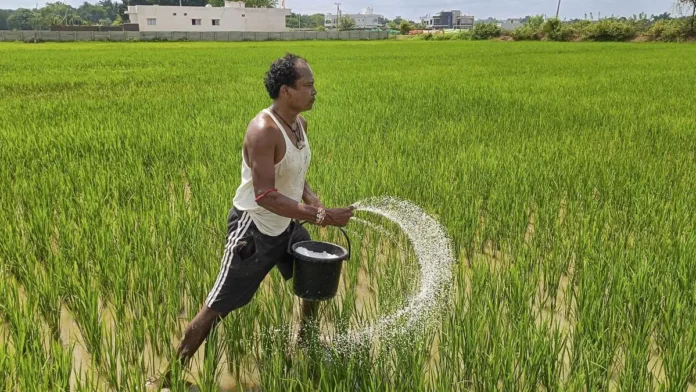
Kharif sowing activities in India have always been a crucial aspect of the country’s agricultural sector. With the onset of the monsoon season, farmers across the country eagerly prepare their fields for sowing a variety of crops. However, this year has been a mixed bag for the agricultural community, with varying rainfall patterns affecting crop yields.
The Kharif season, also known as the summer or monsoon season, starts in June and lasts until September. It is a crucial time for farmers as they rely heavily on the monsoon rains to water their crops. This year, the monsoon arrived on time, but its distribution has been uneven, resulting in mixed results for Kharif sowing activities.
Some regions in the country have received excess rainfall, leading to waterlogging and crop damage. On the other hand, some areas have experienced a deficit in rainfall, causing drought-like conditions and affecting crop growth. These varying patterns have made it challenging for farmers to plan their sowing activities and have resulted in a decrease in crop yields.
One of the states that have been severely affected by the erratic rainfall is Maharashtra. The state is known for its production of crops like cotton, soybean, and pulses. However, this year, the delayed and uneven monsoon has caused a 40% decrease in the sowing of Kharif crops. The farmers in the state are facing a tough time as their crops have been damaged due to excessive rainfall in some regions and lack of it in others.
Similarly, the state of Karnataka has also been hit hard by the unpredictable monsoon. The state is a major producer of crops like paddy, sugarcane, and maize. However, the delayed monsoon has resulted in a 30% decrease in the sowing of Kharif crops. The farmers in the state are struggling to save their crops from the heavy downpour, and the lack of rainfall in some areas has added to their woes.
The situation is not entirely grim, as some states have managed to maintain a good sowing record despite the erratic rainfall. The state of Punjab, known as the “Granary of India,” has seen a 10% increase in the sowing of Kharif crops. The state has a well-developed irrigation system, which has helped the farmers to overcome the challenges posed by the uneven monsoon. The state government has also taken several measures to support the farmers, such as providing timely weather updates and promoting the use of advanced farming techniques.
The state of Uttar Pradesh, which is the largest producer of food grains in the country, has also managed to maintain a good sowing record. The state has seen a 5% increase in the sowing of Kharif crops, thanks to its well-distributed rainfall. The state government has also implemented various schemes to support the farmers, such as providing them with high-quality seeds and fertilizers at subsidized rates.
The central government has also taken note of the challenges faced by the farmers and has announced various relief measures. The government has increased the minimum support price (MSP) for Kharif crops to ensure that the farmers get fair prices for their produce. It has also launched the Pradhan Mantri Fasal Bima Yojana, a crop insurance scheme, to protect the farmers from crop losses due to natural calamities.
Despite the challenges posed by the varying rainfall patterns, the farmers in India have shown resilience and determination. They have adapted to the changing conditions and have utilized modern farming techniques to mitigate the effects of the erratic monsoon. The government has also extended its support to the farmers, and with their combined efforts, we can hope for a better Kharif season in the coming years.
In conclusion, the Kharif sowing activities in India have shown mixed results this year due to the unpredictable monsoon. While some regions have faced challenges, others have managed to maintain a good sowing record. The government’s support and the farmers’ determination have been crucial in overcoming the challenges posed by the varying rainfall patterns. With the right measures and strategies, we can ensure a better future for our agricultural sector and secure the nation’s food security.