
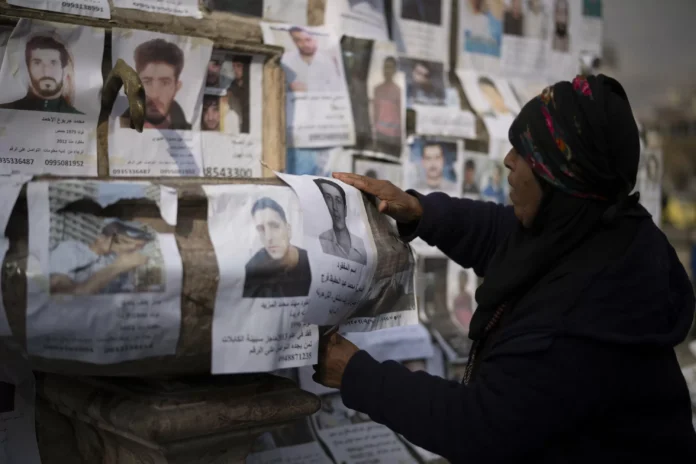
Syria, a country ravaged by decades of Assad family rule, has been facing the aftermath of a brutal civil war that has resulted in the loss of countless lives. While the world watches the continued violence and political turmoil in this Middle Eastern nation, the head of Syria’s commission for missing persons has revealed a staggering number – more than 300,000 people may have disappeared in Syria during the country’s civil war and decades of Assad family rule.
This shocking revelation was made by the head of the commission, Yasser Boueiz, on Monday, drawing attention to the dire state of affairs in Syria. Boueiz, who has been leading the commission for missing persons since 2015, stated that the figure of 300,000 is only an estimate and the actual number of missing individuals may be much higher.
The commission, which was set up by the Syrian government, has been working tirelessly to document and investigate cases of missing persons in an effort to provide answers to their families. Boueiz stressed the importance of uncovering the truth about these missing individuals, saying that “the truth is the foundation of justice and reconciliation.”
Syria has been in the grips of a devastating civil war since 2011, when peaceful anti-government protests turned into a full-blown armed uprising. The conflict has taken a toll on all aspects of Syrian society, with millions of people being displaced and many more losing their lives. The Syrian Observatory for Human Rights, a UK-based monitoring group, estimates that the death toll in the country’s civil war has exceeded 380,000.
The Assad family has ruled Syria for nearly 50 years, with Bashar al-Assad taking over the presidency from his father in 2000. The family’s reign has been characterized by authoritarianism and brutality, with the Syrian people paying the ultimate price for their desire for democracy and freedom.
The commission for missing persons was set up in 2013, amid allegations of human rights abuses by the Assad regime, including arbitrary arrests, detention, torture, and disappearances. It was a welcome step towards seeking justice for the victims and their families, but its limited resources and challenges faced in the war-torn country have made their task incredibly difficult.
The commission receives reports of missing persons from various sources, including families, international organizations, and the government. Boueiz stated that the majority of the missing individuals are men who have been detained by the Syrian government or armed groups. He also highlighted the plight of women and children who have been forcibly disappeared, adding that the commission has also documented cases of missing soldiers and opposition fighters.
The commission’s work is crucial not only for the families of the missing individuals but also for the rebuilding of a post-war Syria. The uncertain fate of these missing persons adds to the already existing trauma faced by the Syrian people and hinders the process of reconciliation and healing. Boueiz stressed the importance of finding the truth and providing closure to the families, stating that “the only way to heal the wounds of the country is by dealing frankly with the rights of the victims.”
The revelation by Boueiz has brought attention to the grim reality faced by the people of Syria and serves as a reminder of the urgent need for justice and accountability. The international community must come together to support the commission for missing persons and ensure that those responsible for these disappearances are held accountable for their actions.
The Syrian people have endured years of conflict and suffering, with millions forced to leave their homes and flee the country. They deserve to know the truth about their loved ones, and the commission for missing persons is playing a crucial role in uncovering that truth. It is now up to the Syrian government and the international community to support their efforts and work towards a better, more peaceful future for Syria. Only then can the country begin to heal from the scars of its past and move towards a brighter tomorrow.