
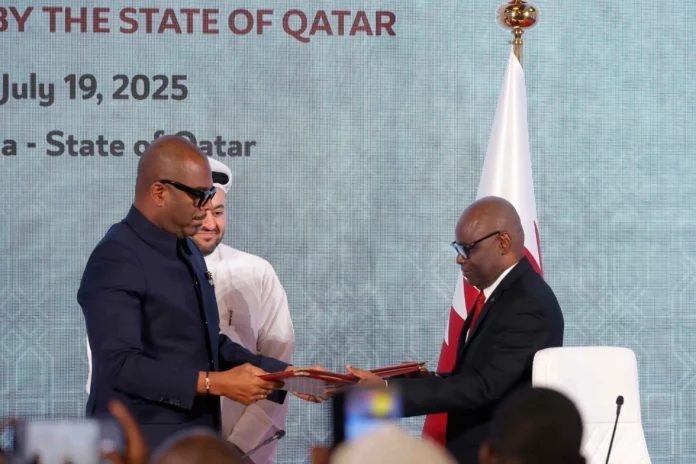
The Democratic Republic of the Congo and Rwanda have taken a significant step towards peace and reconciliation with the convening of their first talks on Friday. This momentous event comes after the two nations signed a landmark peace agreement, marking an important milestone in their efforts to end decades of deadly conflict.
The talks, which were held in the Congolese capital of Kinshasa, were attended by high-level delegations from both countries. The Congolese delegation was led by President Felix Tshisekedi, while the Rwandan delegation was headed by President Paul Kagame. The presence of these two leaders at the talks highlights their commitment to finding a lasting solution to the long-standing conflict between their nations.
The peace agreement, signed on August 21st, is a result of months of negotiations between the two countries. It aims to end the cycle of violence and instability that has plagued the region for decades. The agreement includes provisions for the repatriation of refugees, joint military operations against armed groups, and the promotion of economic cooperation between the two countries.
The conflict between the Democratic Republic of the Congo and Rwanda has its roots in the 1994 genocide in Rwanda, where an estimated 800,000 people, mostly Tutsis, were killed by Hutu extremists. The aftermath of the genocide saw a large influx of refugees into the neighboring Democratic Republic of the Congo, leading to tensions between the two countries. This eventually resulted in two wars, in 1996 and 1998, which claimed millions of lives and left the region in a state of chaos.
However, with the signing of the peace agreement and the convening of the talks, there is renewed hope for a brighter future for both nations. The talks focused on building trust and fostering cooperation between the two countries, with the aim of creating a peaceful and stable region.
In his opening remarks at the talks, President Tshisekedi emphasized the importance of forgiveness and reconciliation in the journey towards lasting peace. He stated, “We cannot move forward without forgiveness. We must let go of the past and focus on building a better future for our people.”
President Kagame echoed these sentiments, stating that the talks were a “historic opportunity” to put an end to the conflict and build a new era of cooperation between the two nations. He also emphasized the need for both countries to work together to address the root causes of the conflict and promote economic development in the region.
The talks also saw the signing of several agreements, including a joint security pact and a memorandum of understanding on economic cooperation. These agreements will lay the foundation for closer ties and increased collaboration between the two nations.
The international community has welcomed the talks and the peace agreement, with many hailing it as a significant step towards lasting peace in the region. The United Nations, African Union, and European Union have all expressed their support for the talks and pledged to provide assistance in implementing the peace agreement.
As the talks concluded, both President Tshisekedi and President Kagame expressed their commitment to implementing the peace agreement and working towards a better future for their nations. The success of these talks and the peace agreement is crucial not only for the Democratic Republic of the Congo and Rwanda but for the entire region as well.
In conclusion, the convening of the first talks between the Democratic Republic of the Congo and Rwanda is a positive and promising development in the quest for peace and stability in the region. The signing of the peace agreement and the agreements reached during the talks are significant steps towards building a new era of cooperation and prosperity for both nations. Let us hope that this marks the beginning of a new chapter of peace and reconciliation in the Great Lakes region.