
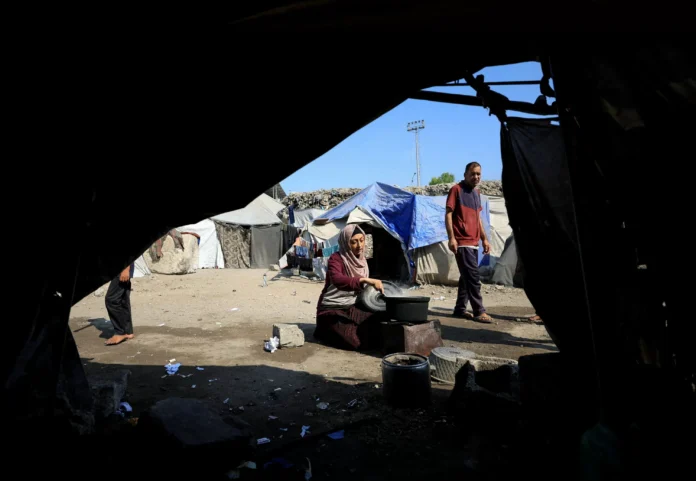
On Monday, the Gaza Strip was once again hit with devastating Israeli airstrikes, resulting in the deaths of at least 34 Palestinians. This tragic event comes just one day after Israel announced that it would be loosening aid restrictions in the region, a move that was hoped to alleviate the deepening humanitarian crisis.
According to local health officials, the airstrikes targeted various areas in Gaza, including a refugee camp and a busy shopping district. Among the casualties were women and children, adding to the already high number of innocent lives lost in this ongoing conflict.
The Israeli airstrikes were met with fierce condemnation from the international community, with many calling for an immediate end to the violence. The United Nations has also expressed deep concern over the escalating situation, stating that the civilian population in Gaza is bearing the brunt of the conflict.
In response, Israeli officials have defended the airstrikes, claiming they were in retaliation to rocket attacks launched by Palestinian militants. However, this justification does little to ease the pain and suffering of the innocent civilians caught in the crossfire.
The recent loosening of aid restrictions in Gaza was seen as a glimmer of hope in an otherwise dire situation. However, the events of Monday serve as a stark reminder that the situation in Gaza is far from resolved. The people of Gaza continue to live in constant fear and uncertainty, with limited access to basic necessities such as food, water, and medical supplies.
The deepening humanitarian crisis in Gaza is a direct result of the ongoing blockade imposed by Israel, which has been in place for over a decade. This blockade has severely restricted the movement of goods and people in and out of Gaza, leading to a severe shortage of essential supplies and hindering economic growth.
In light of these recent events, it is clear that the loosening of aid restrictions is not enough to address the root cause of the crisis in Gaza. The international community must come together to put pressure on Israel to lift the blockade and allow for the free movement of goods and people.
Moreover, it is imperative that both sides engage in meaningful dialogue to find a lasting solution to the conflict. The cycle of violence and retaliation must come to an end, and a peaceful resolution must be reached for the sake of the innocent civilians on both sides.
In the midst of this tragedy, there is still hope. Despite the devastating loss of life, there are countless stories of courage and resilience emerging from Gaza. Ordinary people are coming together to help their fellow citizens, providing shelter, food, and medical assistance to those in need.
The international community must also do its part in supporting the people of Gaza. Countries around the world must increase their humanitarian aid to the region and put pressure on Israel to end the blockade. We must not turn a blind eye to the suffering of our fellow human beings and take action to bring an end to this crisis.
In conclusion, the recent events in Gaza serve as a sobering reminder of the urgent need for a lasting solution to the conflict. The loss of innocent lives is a tragedy that cannot be ignored, and it is up to us, the global community, to take a stand and demand an end to the violence. Let us come together in solidarity and work towards a future where the people of Gaza can live in peace and prosperity.