
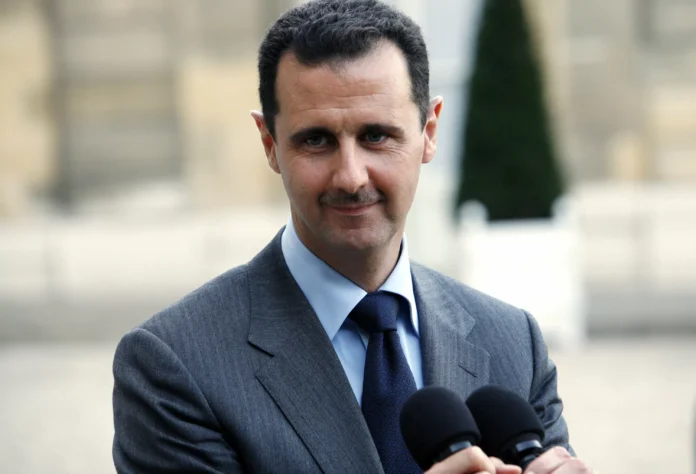
France’s Highest Court Upholds Immunity for Former Syrian Leader Bashar Assad
In a landmark decision on Friday, France’s highest court ruled that former Syrian leader Bashar Assad has head of state immunity while he was in office and therefore, cannot be prosecuted for war crimes. This ruling has sparked a heated debate among legal experts and human rights activists, with many questioning the implications of granting immunity to a leader accused of committing grave atrocities against his own people.
The decision by the Court of Cassation, France’s highest appeals court, stems from a 2019 case brought by human rights groups who accused Assad of using chemical weapons against civilians during the Syrian civil war. The groups argued that Assad should be held accountable for his actions and brought to justice. However, the court ruled that as a former head of state, Assad is protected by immunity under international law.
While this decision may be seen as controversial, it is not without precedent. The concept of head of state immunity has long been recognized in international law, dating back to the principle of sovereign immunity which grants immunity to a state from being sued in the courts of another country. This immunity also applies to a head of state, who is seen as the embodiment of the state itself.
The court’s decision has been met with mixed reactions. On one hand, human rights organizations have expressed their disappointment, stating that the ruling is a blow to justice for the victims of Assad’s regime. They argue that this decision sends a dangerous message to other leaders that they can commit war crimes and still be shielded from prosecution.
On the other hand, the French government has welcomed the ruling, stating that it reflects the country’s commitment to upholding international law and respecting the immunity of heads of state. France’s Justice Minister, Eric Dupond-Moretti, stated that the court’s decision is in line with the country’s longstanding practice of not prosecuting foreign heads of state.
This decision also highlights the complexities of international law and the challenges of balancing justice with the need for diplomatic relations. France, like many other countries, has diplomatic ties with Syria, and this ruling may have implications for those relationships. However, the court has made it clear that the decision is based on legal principles and not political considerations.
It is important to note that this ruling does not absolve Assad of any wrongdoing, but rather recognizes the legal concept of head of state immunity. It is still possible for him to be prosecuted for his alleged crimes once he is no longer in office. In fact, the court’s decision leaves the door open for future legal action against Assad.
The ruling also raises questions about the role of the International Criminal Court (ICC) in prosecuting leaders accused of war crimes. The ICC does not have jurisdiction over Syria as the country is not a member of the court. This means that the only way for Assad to be brought to justice would be through a domestic court or an international tribunal such as the United Nations Security Council.
In the end, the decision by France’s highest court is a reminder of the complexities and challenges of seeking justice for war crimes. While this ruling may not satisfy everyone, it is a testament to the rule of law and the importance of upholding legal principles. It also serves as a reminder that no one is above the law, and that even leaders must be held accountable for their actions.
As we continue to navigate the ever-changing political landscape, it is crucial to remember the importance of justice and accountability. The ruling in this case may not be the outcome many had hoped for, but it is a reflection of the current state of international law and the need for continued dialogue and cooperation to address the issue of war crimes.
In the end, the decision by France’s highest court serves as a reminder to all leaders that they have a responsibility to protect and uphold the rights of their citizens. It is our hope that this ruling will pave the way for a more just and peaceful future, where all individuals are held accountable for their actions, regardless of their position of power.