
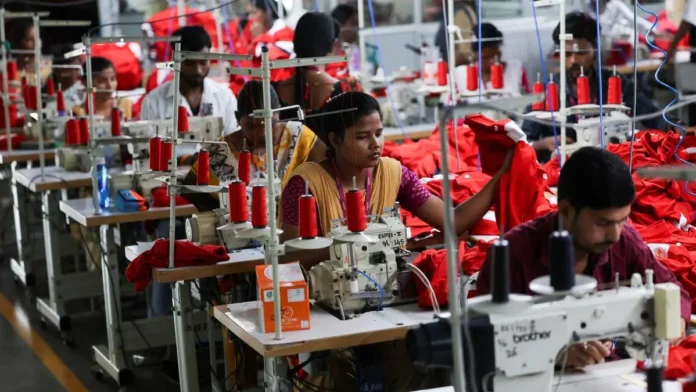
The world is constantly evolving and with it, the demands of the people are also changing. In today’s fast-paced society, the need for products and services is increasing at an unprecedented rate. This has put immense pressure on industries to keep up with the demand and scale up their operations accordingly. The challenge now is how quickly the industry can adapt and meet the ever-growing demand.
The concept of scaling up is not new to the business world. It refers to the process of increasing the production or capacity of a company to meet the rising demand for its products or services. However, in recent times, the pace at which this needs to be done has become a major challenge for industries across the globe.
One of the main reasons for this challenge is the rapid advancement of technology. With the advent of new technologies, consumer preferences are changing, and industries are struggling to keep up. For instance, the rise of e-commerce has completely transformed the retail industry. Consumers now prefer to shop online, which has led to a surge in demand for online shopping platforms. This has put immense pressure on traditional brick-and-mortar stores to adapt and scale up their online operations to stay relevant in the market.
Another factor contributing to this challenge is the ever-changing market trends. With the rise of social media, trends are changing at a lightning-fast speed. What is popular today may become obsolete tomorrow. This poses a significant challenge for industries as they need to constantly innovate and adapt to stay ahead of the competition. Failure to do so can result in losing customers and ultimately, a decline in revenue.
Moreover, the current global scenario has also added to the challenge of scaling up. The ongoing COVID-19 pandemic has disrupted supply chains, causing shortages of raw materials and labor. This has affected industries across various sectors, making it difficult for them to meet the increasing demand. The pandemic has also highlighted the need for industries to be agile and adaptable in the face of unforeseen challenges.
However, despite these challenges, there is a silver lining. The current situation has also brought to light the resilience and determination of industries to overcome obstacles and scale up to meet the demand. Many companies have successfully pivoted their operations to cater to the changing needs of consumers. For instance, several automobile manufacturers have shifted their focus to producing medical equipment such as ventilators to meet the demand during the pandemic.
The key to overcoming this challenge lies in innovation and collaboration. Industries need to constantly innovate and come up with new and efficient ways to scale up their operations. This could involve investing in new technologies, streamlining processes, and adopting a more agile approach. Collaboration with other industries and stakeholders can also prove to be beneficial in overcoming the challenge of scaling up.
Furthermore, governments and regulatory bodies also play a crucial role in addressing this challenge. They need to create a conducive environment for industries to scale up by providing necessary support and incentives. This could include policies that encourage innovation, tax breaks, and streamlined processes for obtaining permits and licenses.
In conclusion, the challenge of how quickly the industry can scale up to meet the demand is a pressing issue that needs to be addressed. With the rapid advancement of technology, changing market trends, and the current global scenario, industries are facing immense pressure to keep up with the demand. However, with the right approach and support from governments and regulatory bodies, this challenge can be turned into an opportunity for growth and success. Industries need to be agile, innovative, and collaborative to overcome this challenge and emerge stronger than ever before.