
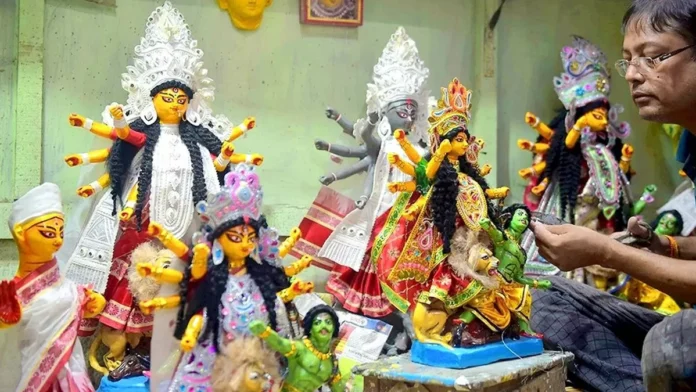
Kumartuli, a clay modellers’ colony located in the bustling city of Kolkata, is a place that is steeped in tradition and culture. This small yet vibrant community has been the hub of idol-making for generations and is renowned for its unique and exquisite craftsmanship. The streets of Kumartuli may seem chaotic and busy, but they tell a story of the unbreakable bond between art, religion, and community.
The name “Kumartuli” literally translates to “potter’s locality” and rightly so as the streets are lined with small workshops where skilled artisans work tirelessly to create beautiful idols of gods and goddesses. This colony, situated on the banks of the Hooghly River, has been a hub for idol-making since the late 19th century. It is said that the British colonizers brought in skilled artisans from the nearby towns of Krishnanagar and Nadia to create idols for their Durga Puja celebrations. Over time, these artisans settled in Kumartuli and their descendants continue to carry on the tradition of idol-making with great passion and dedication.
The process of idol-making in Kumartuli is not just a profession, but a way of life. It is a labor-intensive process that requires immense skill, patience, and attention to detail. The first step in the process is creating a framework using bamboo sticks and straw. This is then covered with clay, which is sourced from the nearby riverbed. The artisans then mold and shape the clay to create the desired form of the idol. The next step is painting the idols using vibrant colors and adorning them with intricate decorations. The final touch is given by the skilled hands of the artisans, who add the eyes and other facial features, bringing the idol to life.
One of the most fascinating aspects of idol-making in Kumartuli is the level of involvement of the community. The entire neighborhood comes together to lend a helping hand during the busy months leading up to Durga Puja, which is the biggest festival in Kolkata. From sourcing the materials to assisting in the creation of the idols, everyone in the community plays a crucial role. This not only creates a sense of unity and camaraderie but also ensures that the tradition of idol-making is passed down from one generation to another.
The idols made in Kumartuli are not just limited to Durga Puja. They are also created for other festivals like Kali Puja, Saraswati Puja, and Ganesh Chaturthi. In recent years, the demand for these idols has also extended beyond Indian borders. Idols from Kumartuli have been exported to countries like the USA, UK, and Singapore, showcasing the global appeal of this traditional art form.
Apart from idol-making, Kumartuli is also home to a vibrant art scene. The narrow lanes are adorned with colorful street art, and the small workshops are filled with sculptures and paintings. The colony also hosts an annual art fair, where local artists get the opportunity to showcase their talent and sell their creations. This has not only helped in promoting the local art scene but has also put Kumartuli on the map as a cultural hub.
The charm of Kumartuli lies in its ability to preserve its age-old traditions while adapting to the changing times. In recent years, the colony has also started incorporating eco-friendly practices in idol-making, using materials like paper mache and natural dyes. This not only adds a touch of sustainability to the process but also reflects the progressive mindset of the artisans.
In conclusion, Kumartuli is not just a clay modellers’ colony, but a living embodiment of the rich cultural heritage of Kolkata. It is a place where tradition and art come together to create something truly magnificent. The passion and dedication of the artisans, combined with the support of the community, have kept this unique tradition alive for over a century. As visitors walk through the bustling streets of Kumartuli, they cannot help but be in awe of the beauty and craftsmanship that surrounds them. It is a place that truly captures the essence of Kolkata and is a must-visit for anyone looking to experience the city’s vibrant culture and traditions.