
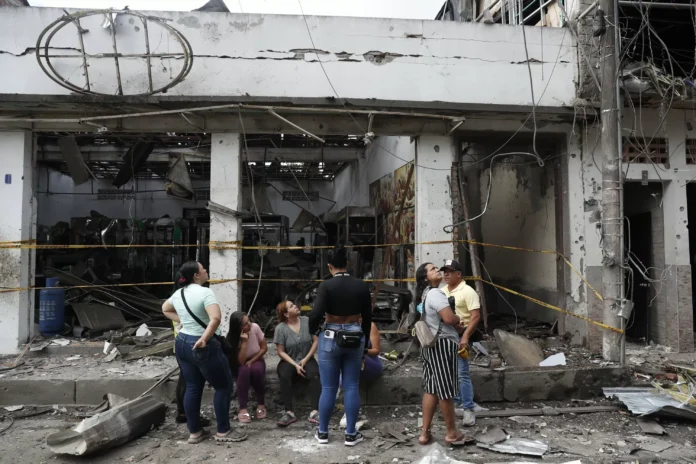
At least seven people were killed and dozens more injured in a series of violent attacks in Colombia’s southwest region on Tuesday. The attacks, which included 19 coordinated bomb and gun strikes, have once again raised concerns about the country’s ongoing security crisis.
The violence erupted in the city of Popayán, the capital of Cauca province, with the sound of explosions and gunfire echoing through the streets. The attacks targeted police stations, government buildings, and a bank, leaving a trail of destruction and chaos in their wake.
According to authorities, the attacks were carried out by members of a rebel group known as the National Liberation Army (ELN). The ELN has been waging a decades-long armed conflict against the Colombian government and is considered one of the country’s most active and dangerous armed groups.
The Colombian President, Ivan Duque, condemned the attacks and declared a state of emergency in the affected area. In a televised address, he pledged to bring those responsible to justice and to take all necessary measures to ensure the safety and security of Colombian citizens.
The violence in Colombia has been escalating in recent months, with a sharp increase in the number of attacks and killings by armed groups. According to a recent report by the United Nations, over 150 human rights defenders and social leaders were killed in Colombia in 2018 alone.
The situation is especially dire in the southwest region, where criminal groups and armed rebels often clash over control of drug trafficking routes and illegal mining operations. The violence has not only claimed innocent lives but has also displaced thousands of people from their homes, leaving them without access to basic necessities and livelihoods.
Colombians are no strangers to violence and conflict, with the country having endured more than 50 years of armed conflict. While a historic peace deal was signed in 2016 between the government and the country’s largest rebel group, the Revolutionary Armed Forces of Colombia (FARC), the ELN has refused to lay down their weapons and continues to carry out attacks.
In the face of this ongoing security crisis, the Colombian people have shown remarkable resilience and determination. They have refused to let violence and fear control their lives and have instead come together to stand up against these acts of terror.
Local community leaders and activists have been working tirelessly to promote peace and reconciliation in their communities. They have been organizing peaceful protests and advocating for government action to address the root causes of the violence.
International organizations and governments have also been stepping up their efforts to support Colombia in its journey towards peace and stability. The United Nations has established a special mission to assist in the implementation of the peace agreement and to support the country’s ongoing peace-building efforts.
As Colombia continues to heal from its past and work towards a brighter future, it is crucial that the government takes decisive action to address the current security crisis. This includes addressing the root causes of the conflict, such as inequality, poverty, and lack of opportunities, and providing support and protection to vulnerable communities.
But most importantly, it is up to all Colombians to come together and reject violence and seek peaceful solutions to their differences. The actions of a few should not define the whole country, and it is crucial that the Colombian people continue to stand strong and united in the face of these challenges.
As the country mourns the loss of those killed in the recent attacks, let us also remember and honor the countless victims of violence in Colombia. Let us use this tragedy as a reminder of the importance of peace, and let it fuel our determination to work towards a future of prosperity and harmony for all Colombians. It is only through unity, resilience, and a commitment to peace that Colombia can overcome this crisis and build a better tomorrow.