
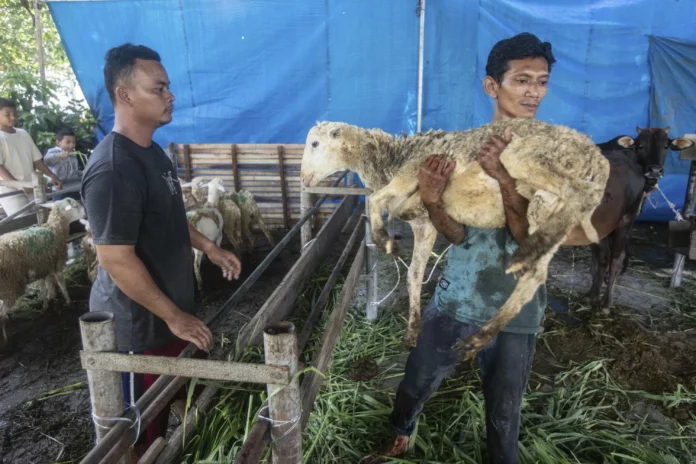
Eid al-Adha, also known as the Festival of Sacrifice, is one of the most important holidays in the Islamic calendar. It is a time of celebration and reflection for Muslims around the world, as they commemorate the willingness of Prophet Ibrahim to sacrifice his son as an act of obedience to God. However, this year’s Eid al-Adha has been marked by lower spending, rising prices, and fewer animal sacrifices, dampening the usual festive spirit for many.
In Jakarta, the capital city of Indonesia, the streets and mosques were usually bustling with worshippers dressed in their finest clothes, exchanging greetings and partaking in communal feasts. However, the ongoing pandemic and economic challenges have taken a toll on the usual celebrations. Many families have had to cut back on their spending, causing a noticeable decrease in the usual festive atmosphere.
The impact of the pandemic on the economy has been felt by many, especially during this holiday season. With job losses and pay cuts, families have had to prioritize their spending, resulting in a decrease in the purchase of new clothes, decorations, and gifts that are typically associated with Eid al-Adha. This has also affected businesses that rely on the holiday season for a boost in sales. The streets of Jakarta, which are usually adorned with colorful lights and decorations, were noticeably less festive this year.
Moreover, the rising prices of essential items have also added to the financial strain on families. The cost of food, especially meat, which is a staple in Eid al-Adha celebrations, has increased significantly. This has made it difficult for many families to afford the traditional animal sacrifices that are an integral part of the holiday. In the past, it was common to see livestock markets bustling with buyers and sellers, but this year, the markets were noticeably quieter.
The decrease in animal sacrifices has also been attributed to the government’s efforts to control the spread of COVID-19. In an effort to prevent large gatherings, the Indonesian government has imposed restrictions on animal sacrifices in public places. This has led to many families choosing to perform the sacrifices at home, with only close family members in attendance. While this has been a necessary precaution, it has also dampened the usual festive spirit of the holiday.
Despite these challenges, Muslims in Jakarta and around the world have found ways to adapt and celebrate Eid al-Adha in a meaningful way. Many have turned to virtual gatherings and online shopping to stay connected with family and friends and still partake in the holiday traditions. Others have focused on the spiritual aspect of the holiday, spending more time in prayer and reflection.
The decrease in spending and animal sacrifices may have affected the outward appearance of the holiday, but it has also brought attention to the true essence of Eid al-Adha – to remember the sacrifices made by Prophet Ibrahim and to be grateful for the blessings in our lives. It has reminded us that the spirit of the holiday lies in the love and unity of the community, rather than material possessions.
As we navigate through these challenging times, let us remember the true meaning of Eid al-Adha and use this opportunity to reflect on our blessings and show compassion towards those in need. Let us also pray for an end to the pandemic and for the well-being of all humanity. May the spirit of Eid al-Adha continue to bring us together and strengthen our faith. Eid Mubarak to all!