
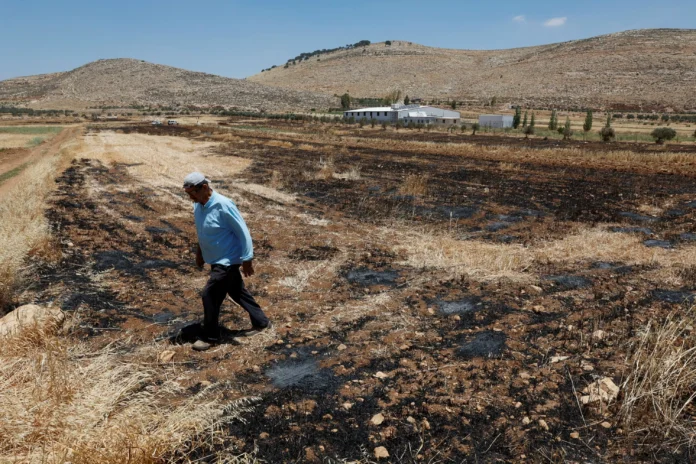
Israel has announced plans to establish 22 new Jewish settlements in the occupied West Bank, a move that has sparked controversy and deepened tensions in the region.
The announcement, made on Thursday, includes the retroactive legalization of unauthorized outposts, which has been met with criticism from the international community.
The decision to expand settlements in the West Bank has been met with both support and condemnation. Supporters argue that these settlements are necessary for the security and growth of Israel, while critics argue that they are illegal under international law and hinder the possibility of a two-state solution.
The announcement comes at a time when tensions between Israel and Palestine are already high. Just last month, the United States recognized Jerusalem as the capital of Israel, a move that was met with widespread protests and condemnation from the international community.
The new settlements will be located in areas that are currently under Israeli control, but are considered to be part of the occupied West Bank by the international community. This includes the strategic Jordan Valley, which is seen as crucial for Israel’s security.
Israeli Prime Minister Benjamin Netanyahu defended the decision, stating that the settlements are necessary for the security of Israel and that they will continue to expand and thrive. He also stated that the retroactive legalization of unauthorized outposts is a way to address the needs of the Jewish population in the West Bank.
However, the announcement has been met with strong criticism from the Palestinian Authority, who see it as a violation of their rights and a hindrance to the possibility of a two-state solution. Palestinian officials have called on the international community to condemn the decision and take action to stop the expansion of settlements.
The United Nations has also expressed concern over the announcement, stating that it goes against international law and undermines the possibility of a peaceful resolution to the Israeli-Palestinian conflict.
The European Union has also condemned the decision, with EU foreign policy chief Federica Mogherini stating that the expansion of settlements is illegal under international law and undermines the prospects for a two-state solution.
The announcement has also been met with criticism from human rights organizations, who argue that the expansion of settlements in the West Bank is a violation of the rights of the Palestinian people and contributes to the ongoing humanitarian crisis in the region.
Despite the criticism, Israel remains determined to move forward with the expansion of settlements in the West Bank. This decision has been met with support from some Israeli politicians and citizens, who see it as a way to strengthen Israel’s hold on the region.
However, it is important to note that the expansion of settlements in the West Bank is not a solution to the Israeli-Palestinian conflict. It only serves to deepen the divide between the two sides and hinder the possibility of a peaceful resolution.
The international community must continue to pressure Israel to halt the expansion of settlements and work towards a peaceful resolution that respects the rights of both Israelis and Palestinians.
In conclusion, the announcement of 22 new Jewish settlements in the occupied West Bank, including the retroactive legalization of unauthorized outposts, has sparked controversy and deepened tensions in the region. While Israel argues that these settlements are necessary for its security, the international community sees them as a violation of international law and a hindrance to peace. It is crucial for all parties involved to work towards a peaceful resolution that respects the rights of both Israelis and Palestinians.