
Behind Barbed Wire in Gaza: A Cry for Humanity
The world has witnessed some of the darkest chapters in human history, from the Holocaust to the Rwandan genocide. These events serve as a reminder of the atrocities that can occur when humanity is stripped away and replaced with hatred and oppression. And yet, despite the lessons of the past, we find ourselves facing a similar situation in the Gaza Strip, where Palestinians are enduring starvation and death in conditions that mirror the Nazi-era ghettos of World War II.
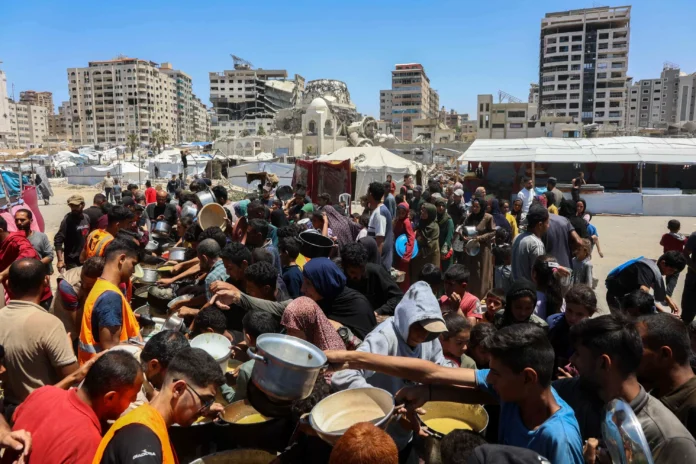
For over a decade, the Gaza Strip has been under a crippling blockade imposed by Israel, severely restricting the movement of people and goods in and out of the territory. This has resulted in an alarming humanitarian crisis, with the United Nations estimating that 80% of the population is dependent on aid to survive. The situation is dire, with basic necessities such as food, water, and medicine in short supply. And while the blockade has been eased in recent years, the damage has already been done.
The people of Gaza are trapped in a cycle of poverty and despair, with no means of escape. The unemployment rate is one of the highest in the world, and the economy is in shambles. Families are struggling to put food on the table, and children are going to bed hungry. The lack of access to clean water and proper sanitation has led to the spread of diseases, and the healthcare system is on the brink of collapse.
But perhaps the most harrowing aspect of life in Gaza is the constant threat of violence. The territory has been the site of numerous conflicts between Israel and Palestinian militant groups, resulting in the loss of thousands of lives, many of them innocent civilians. The recent escalation of violence in May 2021 has once again brought the suffering of the people of Gaza into the spotlight. The images of destroyed buildings, grieving families, and wounded children are a stark reminder of the human cost of this ongoing conflict.
In the midst of all this, the people of Gaza are living behind barbed wire, confined to a small strip of land with no hope for a better future. The conditions in Gaza are reminiscent of the ghettos that were established by the Nazis during World War II, where Jews were forced to live in overcrowded and unsanitary conditions, cut off from the rest of the world. The parallels are chilling, and it is a tragedy that in the 21st century, we are witnessing a similar situation unfold.
The people of Gaza are not just statistics or casualties of war. They are mothers, fathers, children, and grandparents, with hopes and dreams just like any of us. They deserve to live in dignity and peace, free from the constant fear and suffering that has become a daily reality for them. It is our moral obligation as fellow human beings to speak out against the injustice and oppression that they are facing.
We cannot turn a blind eye to the plight of the people of Gaza any longer. We must demand an end to the blockade and the lifting of all restrictions on the movement of people and goods. We must call for an immediate ceasefire and a peaceful resolution to the conflict. And most importantly, we must show our support and solidarity with the people of Gaza, who have been enduring unimaginable hardships for far too long.
It is time for the international community to take action and hold those responsible for the suffering of the people of Gaza accountable. We cannot allow history to repeat itself, and we must do everything in our power to prevent another humanitarian crisis from unfolding before our eyes. Let us stand together in solidarity with the people of Gaza and send a message of hope and humanity to those who are suffering behind barbed wire.