
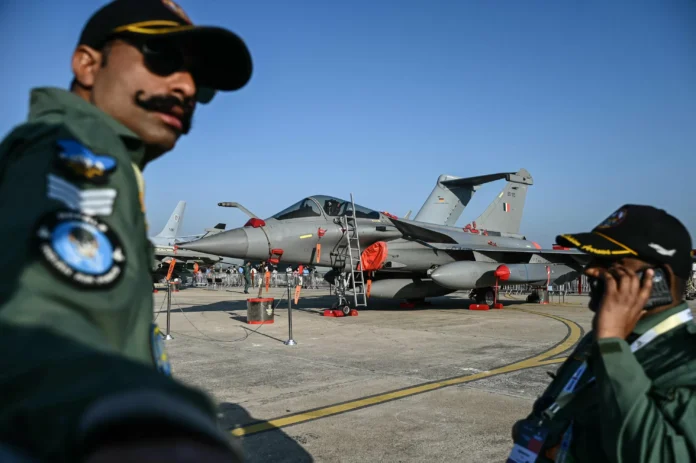
Arch rivals India and Pakistan have been locked in a tense and often volatile relationship since their partition in 1947. However, the recent military clash between the two countries in 2019 has further escalated their already heightened tensions and rivalry. This clash, which resulted in the loss of lives on both sides, has served as a stark reminder of the fragility of the peace between these two nuclear-armed nations.
In the aftermath of this clash, both India and Pakistan have significantly boosted their military capabilities, raising concerns about the potential for rapid escalation even in limited confrontations. This development has further complicated the already complex and delicate relationship between the two nations. It is crucial to understand the reasons behind this rapid military buildup and its potential consequences for the region.
One of the primary reasons for this escalation in military capabilities is the ongoing territorial dispute over the region of Kashmir. This disputed territory, which is claimed by both India and Pakistan, has been a source of conflict between the two nations for decades. The 2019 clash was sparked by a suicide bombing in Indian-administered Kashmir, which was claimed by a militant group based in Pakistan. In retaliation, India launched airstrikes on what it claimed were terrorist camps in Pakistani territory. This led to a dogfight between the two countries’ air forces, resulting in the loss of an Indian fighter jet and the capture of its pilot by Pakistan.
The 2019 clash served as a wake-up call for both nations, highlighting the need to modernize their military capabilities and be better prepared for any future conflicts. India, with its rapidly growing economy, has been actively investing in its defense sector, with a particular focus on modernizing its air force and navy. It has also been inducting advanced weapons systems and strengthening its border infrastructure to counter any potential threats from Pakistan.
On the other hand, Pakistan, facing economic challenges and internal instability, has been relying on its traditional ally, China, for military support. China has been Pakistan’s largest supplier of military equipment, including fighter jets, missiles, and naval vessels. In recent years, China has also been assisting Pakistan in developing its indigenous defense capabilities, including the development of the JF-17 fighter jet.
The rapid military buildup by both India and Pakistan has raised concerns not only about the potential for escalation but also about the impact on regional stability. The growing nuclear capabilities of both countries and their proximity to each other have added to the already volatile situation. The international community has also been closely monitoring the situation, with concerns about the potential for a nuclear conflict.
However, amidst all these developments, there have been some positive developments in the relationship between India and Pakistan. In February 2019, the two countries signed an agreement to open a corridor for Sikh pilgrims to visit a holy site in Pakistan, marking a significant step towards improving people-to-people ties. There have also been instances of cooperation between the two nations, such as the release of a captured Indian pilot as a goodwill gesture by Pakistan.
It is essential for both India and Pakistan to recognize that the path to peace and stability lies in dialogue and cooperation rather than military buildup and confrontation. Both nations need to engage in meaningful dialogue to address their long-standing issues, including the Kashmir dispute, and work towards finding lasting solutions. The international community, especially the United Nations, can play a crucial role in facilitating this process.
In conclusion, the sharp enhancement of military capabilities by India and Pakistan since their 2019 clash has raised the risk of rapid escalation in limited confrontations. However, it is also an opportunity for both nations to realize the futility of an arms race and instead focus on building a peaceful and stable region. The path to lasting peace and prosperity lies in cooperation and dialogue, and it is high time for India and Pakistan to take this path and put an end to their arch-rivalry.