
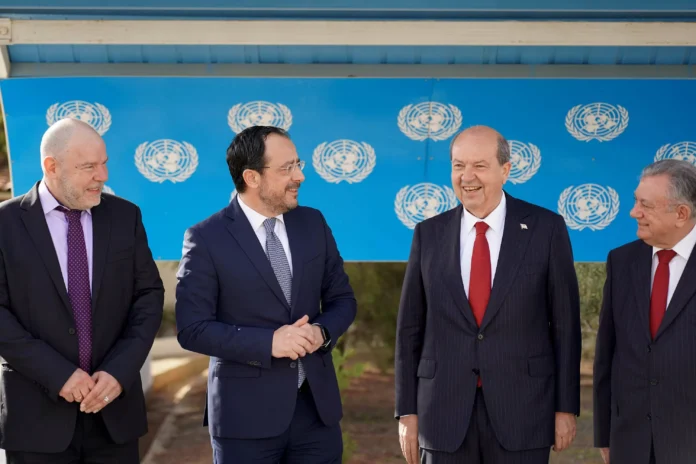
Divided between Greek and Turkish Cypriots, the Mediterranean island of Cyprus has been in a state of limbo for decades. Despite numerous attempts at resolution, the fate of this beautiful island remains uncertain. As the United Nations continues to play a crucial role in facilitating peace talks, it is important to reflect on the history and current situation of Cyprus and the efforts being made to find a lasting solution.
The island of Cyprus has a long and complex history, with influences from various civilizations throughout the centuries. It was under British rule for many years before gaining its independence in 1960. However, this independence was short-lived as tensions between the Greek and Turkish Cypriot communities soon erupted into violence, ultimately leading to the division of the island in 1974. The Turkish Cypriots declared their own state in the northern part of the island, recognized only by Turkey, while the Greek Cypriots remained in control of the south.
Since then, numerous efforts have been made to reunite the island, including the establishment of a United Nations Peacekeeping Force in 1964. However, it was not until 2004 that a UN-backed plan for the reunification of Cyprus, known as the Annan Plan, was put to a referendum. Unfortunately, the plan was rejected by the Greek Cypriots, while the Turkish Cypriots voted in favor. This was a significant setback for the reunification efforts, but it also showed that there was a willingness from both sides to find a solution.
In recent years, there have been renewed efforts to restart negotiations and find a way to reunite the island. The United Nations, under the leadership of Secretary-General Antonio Guterres, has been actively involved in facilitating talks between the Greek and Turkish Cypriot leaders. These talks have focused on issues such as power-sharing, property rights, and the return of refugees. While progress has been slow, there have been some positive developments, such as the opening of new crossing points between the two sides in 2018.
One of the major challenges in finding a solution for Cyprus is the deep divide between the two communities. The Greek and Turkish Cypriots have distinct identities, cultures, and languages, making it difficult to bridge the gap between them. However, there have also been efforts to promote reconciliation and build trust between the two sides. For example, the Bi-Communal Peace Education Project, supported by the United Nations Development Programme, brings together students from both communities to learn about each other’s history and culture.
Another aspect that cannot be ignored in the search for a solution is the involvement of external actors. Turkey, as the only country that recognizes the Turkish Republic of Northern Cyprus, plays a significant role in the negotiations. The European Union, of which the Republic of Cyprus is a member, also has a vested interest in the resolution of the conflict. However, it is important for all external actors to respect the sovereignty and self-determination of the Cypriot people and support a solution that is mutually beneficial for both communities.
Despite the challenges, there is hope for a peaceful resolution to the Cyprus issue. The recent election of Mustafa Akinci as the new Turkish Cypriot leader has brought fresh optimism to the negotiations. Akinci has expressed a strong commitment to finding a solution and has called for a new approach to the talks, emphasizing the need for trust-building measures and a focus on common ground.
As we look towards the future, it is important to remember that a united Cyprus is not just a political issue, but also a humanitarian one. The division of the island has caused immense suffering for both communities, with families separated and lives disrupted. A resolution would not only bring economic benefits and stability to the region but also heal the wounds of the past and pave the way for a brighter future for all Cypriots.
In conclusion, the fate of Cyprus may still be up in the air, but there is a glimmer of hope that a solution can be found. The efforts of the United Nations, along with the commitment and determination of the Cypriot leaders, give us reason to believe that a united Cyprus is possible. As we continue to support and encourage the negotiations, let us also remember the importance of reconciliation and building bridges between the two communities. Only then can we truly say that the fate of Cyprus has been decided, and it is a future of peace, unity, and prosperity.