
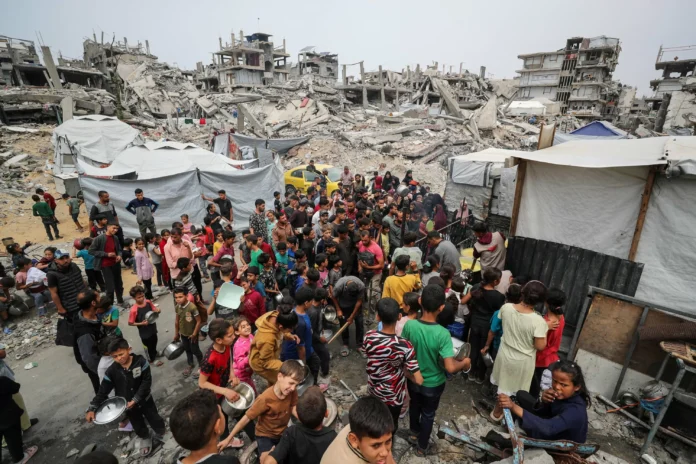
Israel is facing a critical decision on Friday as Prime Minister Benjamin Netanyahu considers whether to escalate attacks in the Gaza Strip. The situation in the region has been tense for weeks, with ongoing clashes between Israeli forces and Palestinian protesters. However, the recent escalation of violence has raised concerns about the potential for a full-blown humanitarian crisis.
According to local media reports, Netanyahu is set to hold a meeting on Friday to discuss the possibility of ramping up attacks in the Gaza Strip. This decision comes after a series of violent clashes between Israeli forces and Palestinian protesters, resulting in multiple casualties on both sides.
The situation in the Gaza Strip has been deteriorating for years, with a blockade imposed by Israel since 2007 severely limiting the movement of people and goods in and out of the territory. This has led to high unemployment rates and a lack of basic necessities for the people living in Gaza.
In recent weeks, tensions have escalated as Palestinian protesters have been gathering at the border fence with Israel to demand their right to return to their ancestral homes. These protests, known as the Great March of Return, have been met with a harsh response from Israeli forces, resulting in the deaths of over 100 Palestinians and thousands more injured.
The international community has condemned the use of excessive force by Israeli forces and has called for an immediate end to the violence. The United Nations has also expressed concern about the deteriorating humanitarian situation in Gaza and has urged all parties to exercise restraint.
The decision that Netanyahu will make on Friday will have far-reaching consequences for both Israelis and Palestinians. It is crucial that he considers the impact of any escalation of attacks on the already dire situation in Gaza.
While Israel has the right to defend itself, any action taken must be proportionate and in line with international law. The use of excessive force and collective punishment against the people of Gaza must be avoided at all costs.
It is also important for Israel to address the root causes of the conflict and work towards a peaceful resolution. This includes lifting the blockade on Gaza and allowing for the free movement of people and goods, as well as addressing the grievances of the Palestinian people.
The decision on Friday will not only affect the people of Gaza but also the stability of the entire region. It is crucial that all parties involved exercise restraint and work towards finding a peaceful solution to this ongoing conflict.
As citizens of the world, we must stand in solidarity with the people of Gaza and call for an end to the violence and suffering. We must also urge our leaders to take a stand for justice and work towards a lasting peace in the region.
In conclusion, the decision that Israel will make on Friday is a critical one, and it is imperative that it is made with the utmost consideration for the lives of both Israelis and Palestinians. Let us hope that it will be a step towards a peaceful resolution and an end to the cycle of violence in the region.