
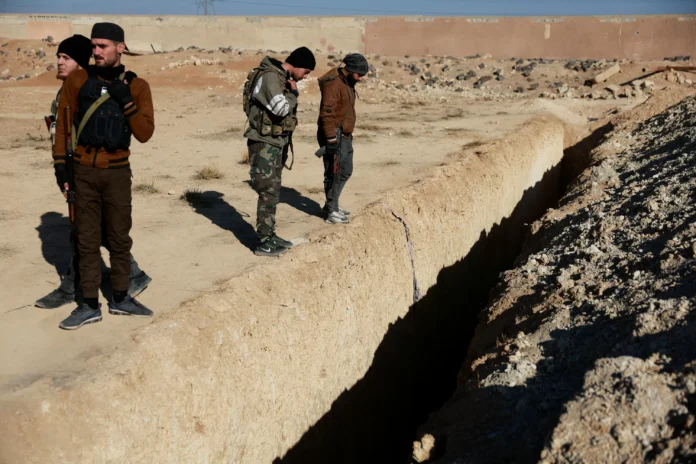
Former U.S. War Crimes Ambassador Reveals Shocking Truth about Syrian Mass Graves
In a recent visit to mass grave sites near Damascus, former U.S. war crimes ambassador Stephen Rapp uncovered a horrifying reality – over 100,000 people have likely been tortured to death and disappeared by the regime of Syrian President Bashar al-Assad.
Rapp, who served as the United States Ambassador-at-Large for War Crimes Issues from 2009 to 2015, made the visit as part of a United Nations Commission of Inquiry on Syria. The commission has been investigating human rights abuses committed during the ongoing civil war in Syria.
During his visit, Rapp spoke to survivors and witnesses of the atrocities committed by the Assad regime. He was shown the remains of thousands of victims, many of whom were brutally tortured before being killed and buried in mass graves.
The former ambassador described the scene as “horrific” and “unimaginable.” He stated that the evidence he saw was “overwhelming” and that it points to a systematic and widespread campaign of torture and killing by the Syrian government.
Rapp’s findings are consistent with those of previous investigations into the Syrian conflict. In 2014, a report by three international war crimes prosecutors concluded that the Assad regime had committed crimes against humanity, including torture, rape, and murder.
However, Rapp’s visit to the mass graves has shed new light on the extent of the atrocities committed by the Syrian government. The sheer number of victims found in the mass graves is a chilling reminder of the brutality of the regime and the suffering of the Syrian people.
The former ambassador also expressed his concern for the families of the victims, who have been left without answers or closure. He called on the international community to support efforts to identify and return the remains of the victims to their families.
Rapp’s visit to the mass graves has once again brought attention to the ongoing human rights crisis in Syria. It serves as a stark reminder that the conflict, now in its tenth year, continues to take a devastating toll on the lives of innocent civilians.
The Syrian conflict began in 2011, when peaceful protests against the Assad regime were met with a violent crackdown. The situation quickly escalated into a full-scale civil war, with various groups vying for control of the country.
Since then, the conflict has claimed the lives of over 500,000 people and displaced millions more. The use of chemical weapons, barrel bombs, and other indiscriminate weapons has led to a humanitarian crisis of epic proportions.
The Assad regime has been accused of committing numerous war crimes and crimes against humanity, including the use of chemical weapons, the targeting of civilians, and the systematic torture and killing of political opponents.
Despite multiple attempts at peace negotiations, the conflict shows no signs of abating. The Syrian people continue to suffer, and the international community has been criticized for not doing enough to stop the violence and hold those responsible accountable.
Rapp’s visit to the mass graves serves as a reminder that the international community must take action to end the atrocities in Syria. The United Nations and other international bodies must continue to investigate and document human rights abuses, and hold those responsible accountable for their actions.
Furthermore, the international community must provide support to the victims and their families, who have endured unimaginable suffering and loss. This includes providing access to justice and reparations for the victims, as well as supporting efforts to rebuild the country and provide aid to those in need.
The former U.S. war crimes ambassador’s visit to the mass graves near Damascus has brought to light the horrific reality of the Syrian conflict. It is a call to action for the international community to do more to protect the rights and lives of the Syrian people.
As we remember the victims of the Syrian conflict, let us also remember the words of Stephen Rapp – “We must not let these atrocities be forgotten. We must continue to seek justice for the victims and hold those responsible accountable for their actions.”