
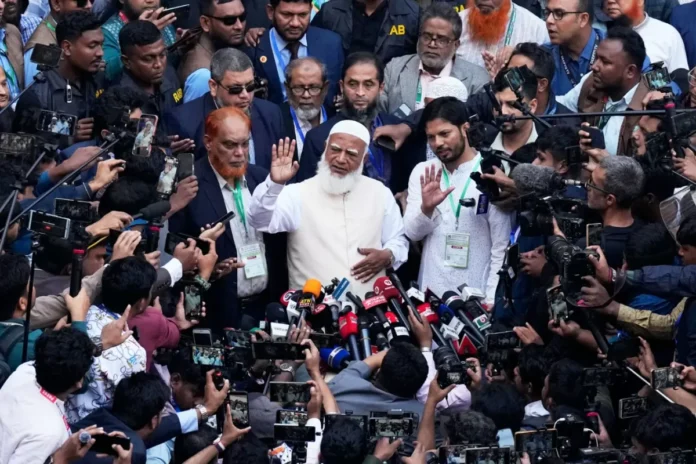
Jamaat’s Ideological Hostility Towards India: A Cause for Concern
The Jamaat-e-Islami, a prominent Islamic organization in South Asia, has been known for its strong ideological stance against India. This hostility towards India has been a cause for concern for many, especially in light of the organization’s close proximity to Pakistan. The Jamaat’s anti-India rhetoric and actions have not only strained the relationship between the two countries, but it has also had a significant impact on the political landscape of the region.
The Jamaat-e-Islami was founded in 1941 in British India, with the aim of promoting Islamic values and principles. However, over the years, the organization has become increasingly radicalized, with a strong anti-India sentiment at its core. This has been evident in their public statements, rallies, and even their involvement in terrorist activities.
One of the main reasons for the Jamaat’s hostility towards India is its belief in the concept of a “Muslim Ummah” or community. The organization sees India as a predominantly Hindu country, and therefore, not a part of the Muslim Ummah. This belief has led to the Jamaat’s rejection of India’s secular and democratic values, which they see as a threat to their own ideology.
Moreover, the Jamaat’s close ties with Pakistan have also played a significant role in their anti-India stance. Pakistan, being a Muslim-majority country, has always been seen as a natural ally by the Jamaat. This has resulted in the organization aligning itself with Pakistan’s interests, often at the expense of India’s.
The Jamaat’s ideological hostility towards India has not only affected the relationship between the two countries, but it has also had a significant impact on the domestic politics of India. The organization has been known to influence the Muslim community in India, often promoting a separatist agenda and creating a sense of alienation among the minority population. This has led to a rise in communal tensions and has hindered the country’s progress towards a more inclusive society.
Furthermore, the Jamaat’s anti-India stance has also put pressure on the Indian government to take a tougher stance towards the organization and its activities. The government is often forced to take a strong public position to avoid being perceived as “soft” on India’s enemies. This has resulted in a cycle of hostility and mistrust between the two countries, making it difficult to find a peaceful resolution to their issues.
It is important to note that the Jamaat-e-Islami does not represent the views of all Muslims in India. In fact, many Muslim leaders and organizations have condemned the Jamaat’s extremist ideology and have called for a more inclusive and peaceful approach towards India.
In recent years, there have been efforts to bridge the gap between India and the Jamaat-e-Islami. The Indian government has made attempts to engage with the organization and address their concerns. However, these efforts have been met with resistance from the Jamaat, who continue to promote their anti-India agenda.
It is high time for the Jamaat-e-Islami to realize that their ideological hostility towards India is not only detrimental to the relationship between the two countries but also to the well-being of the Muslim community in India. The organization must understand that India is a diverse and secular country, where people of all religions and beliefs coexist peacefully. It is time for the Jamaat to let go of their extremist ideology and work towards building a more harmonious relationship with India.
In conclusion, the Jamaat’s ideological hostility towards India is a cause for concern and must be addressed by both countries. It is essential for the organization to understand that their actions and rhetoric have far-reaching consequences and can no longer be ignored. It is time for the Jamaat to embrace a more moderate and inclusive approach towards India, for the betterment of the entire region. Only then can we hope for a peaceful and prosperous future for both India and Pakistan.

