
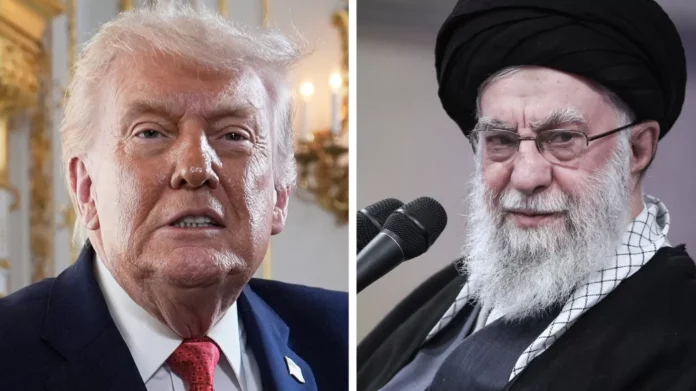
President Trump has once again made headlines with his bold statements, this time targeting Iran’s supreme leader Ayatollah Ali Khamenei. In an interview with NBC Nightly News, the President warned Khamenei that he should be “very worried” amidst escalating tensions between the two countries.
The tension between the United States and Iran has been on the rise since Trump’s withdrawal from the 2015 nuclear deal and the subsequent imposition of economic sanctions on Iran. The recent attack on US embassy in Baghdad by Iranian-backed militia groups has only added fuel to the fire, leading to fears of a potential military conflict.
During the interview, Trump expressed his concern over Iran’s continued aggression and defiant actions. He stated, “I would say he should be very worried, yeah. He should be.” This warning comes as a strong message to the Iranian regime that their actions will not be taken lightly by the US.
The United States has long been at odds with the Iranian regime, with Trump openly criticizing their support for terrorism and their human rights abuses. The President has also accused Iran of trying to develop nuclear weapons and has called for a tougher stance against them.
In response to Trump’s warning, Iran’s Foreign Minister Javad Zarif tweeted, “Whenever/wherever US interferes, chaos, repression, and resentment follow.” This statement highlights the ongoing tension and animosity between the two countries and their differing views on international affairs.
The recent events have also raised concerns about the safety of American citizens in the region. The US State Department has issued a travel advisory, urging American citizens to exercise caution and avoid any unnecessary travel to Iran.
The tension between the two countries has also caused a ripple effect globally, with other countries expressing their concerns and urging both sides to exercise restraint. The European Union has called for de-escalation and dialogue to resolve the crisis peacefully.
Despite the rising tension, President Trump has made it clear that he is not seeking war with Iran. In his recent address, he stated, “We do not seek regime change, however, the regime’s aggression in the region, including their use of proxy fighters to destabilize the region, must end and it must end now.”
It is evident that the United States is not backing down from its tough stance on Iran. Trump’s warning to Khamenei is a clear indication that the US will not tolerate any further aggression from Iran. However, the President has also left the door open for diplomacy and a peaceful resolution to the crisis.
The US has also taken steps to protect its interests in the region, with the deployment of additional troops and military equipment to the Middle East. This move has been criticized by some as a provocation, but the US has maintained that it is a precautionary measure to protect its citizens and interests.
In light of the recent developments, the international community is closely monitoring the situation and urging both sides to exercise utmost restraint. Any further escalation of the tension could have dire consequences not just for the US and Iran, but for the entire region.
In conclusion, President Trump’s warning to Iran’s supreme leader is a bold and necessary step to address the escalating tension between the two countries. The US has made it clear that it will not tolerate any further aggression from Iran and is willing to take necessary measures to protect its citizens and interests. However, the President has also expressed his desire for a peaceful resolution and has left the door open for dialogue. The international community must come together to urge both sides to de-escalate and find a peaceful resolution to this crisis.