
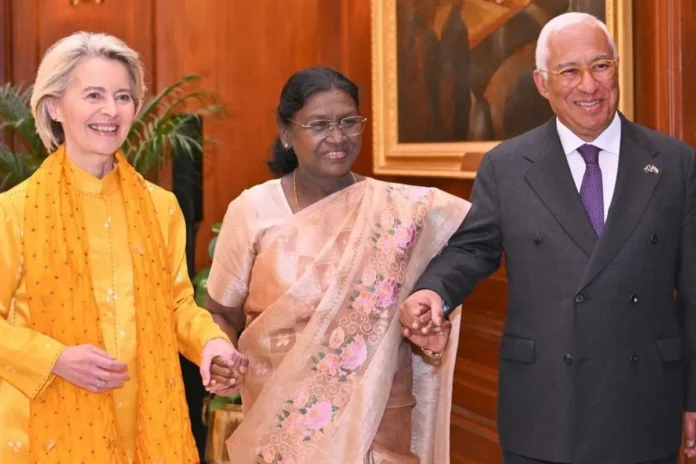
Bandhini, also known as Bandhej, is a traditional tie-and-dye technique that has been practiced for centuries in the states of Gujarat and Rajasthan in India. This beautiful art form has not only stood the test of time but has also gained immense popularity all over the world. The intricate patterns and vibrant colors of Bandhini have captured the hearts of people, making it a must-have in every wardrobe.
The word ‘Bandhini’ is derived from the Sanskrit word ‘Bandhana’ which means ‘to tie’. This technique involves tying small portions of the fabric with threads and then dyeing it to create beautiful patterns. The result is a unique and mesmerizing design that is a true reflection of the rich culture and heritage of these two states.
The origin of Bandhini can be traced back to the 6th century B.C. It is believed that the technique was introduced by the Khatri community, who were skilled in the art of dyeing and printing. Over the years, Bandhini has evolved and has become an integral part of the traditional attire of Gujarat and Rajasthan. It is not just a fabric, but a symbol of their identity and pride.
The process of creating Bandhini is a labor-intensive one and requires great skill and precision. The fabric is first washed and then dyed in a light color. The design is then marked on the fabric using a stencil or by hand. The artisans then tie small portions of the fabric with threads, leaving the desired pattern exposed. The fabric is then dyed in a darker color, and the tied portions remain untouched, creating a beautiful contrast. This process is repeated multiple times to achieve the desired effect. The final step involves untying the threads and revealing the intricate patterns, which are then set by washing and drying the fabric.
One of the most fascinating aspects of Bandhini is the variety of patterns and designs that can be created. From simple dots and lines to complex geometric and floral patterns, the possibilities are endless. Each design has a unique name and holds a special significance. For example, the ‘Leheriya’ pattern, which resembles the waves of a river, is believed to bring good luck and prosperity. The ‘Chunariya’ pattern, which is a combination of dots and lines, is considered to be auspicious for weddings.
Bandhini is not just limited to clothing; it is also used to create beautiful home decor items such as bedspreads, curtains, and tablecloths. The use of natural dyes and eco-friendly techniques makes Bandhini a sustainable and environmentally friendly art form.
Apart from its aesthetic appeal, Bandhini also has a significant cultural and social significance. It is an integral part of festivals and celebrations in Gujarat and Rajasthan. Women of these states adorn themselves in Bandhini sarees and dupattas during Navratri and other traditional occasions. It is also a source of livelihood for many artisans, especially women, who have been practicing this art form for generations.
In recent years, Bandhini has gained global recognition and has become a fashion statement. Designers all over the world have incorporated this traditional technique into their collections, giving it a modern twist. The use of Bandhini in contemporary fashion has not only revived this dying art form but has also provided employment opportunities for many artisans.
In conclusion, Bandhini is not just a fabric, but a symbol of the rich cultural heritage of Gujarat and Rajasthan. It is a testament to the skill and creativity of the artisans who have kept this art form alive for centuries. The popularity of Bandhini has transcended borders and has become a part of the global fashion industry. Let us continue to appreciate and support this beautiful art form, and keep the tradition of Bandhini alive for generations to come.