
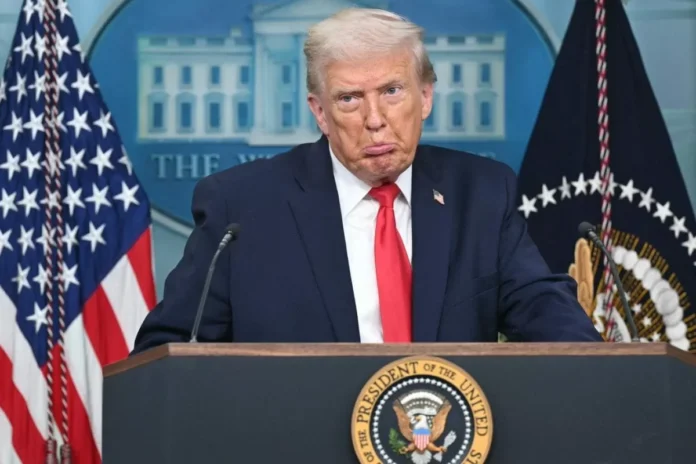
In July of this year, President Donald Trump announced a breakthrough trade agreement with South Korean President Moon Jae-in. This news was met with excitement and optimism, as it marked a significant step forward in the relationship between the United States and South Korea. However, despite the initial announcement, negotiations for this agreement have been ongoing for months, causing some concern and uncertainty. Yet, it is important to understand the significance of this trade deal and the positive impact it will have on both countries.
The agreement, officially known as the United States-Korea Free Trade Agreement (KORUS), was initially established in 2007 and has been a crucial part of the economic relationship between the two nations. The deal eliminated tariffs on most goods and services between the two countries, resulting in a significant increase in trade and investment. However, President Trump has long criticized the agreement, calling it a “job-killer” and vowing to renegotiate its terms.
In July, President Trump and President Moon announced a revised version of the agreement, which included changes to the automotive industry and a new side deal that imposes a quota on South Korean steel exports to the US. This was met with mixed reactions, with some praising the deal for addressing long-standing issues and others expressing concerns about the potential impact on both countries’ economies. As a result, negotiations continued for several months, with both sides working to find a resolution that would benefit both nations.
Finally, in December, the two leaders were able to finalize the agreement and sign the revised deal. In a joint statement, President Trump praised the deal, saying, “This is a tremendous breakthrough for both of our countries. It is a win-win situation that will lead to more jobs, more trade, and more investment.” He also thanked President Moon for his cooperation and commitment to reaching a mutually beneficial agreement.
This trade deal is not only a victory for the US and South Korea, but it also sends a positive message to the international community. In a time of increasing trade tensions and conflicts, this agreement demonstrates that it is possible for nations to come together and find common ground through negotiations. It also serves as an example of the strong and enduring relationship between the US and South Korea, which has been built upon shared values and interests.
The revised KORUS agreement has several key benefits for both countries. For the US, it addresses concerns about the trade deficit, particularly in the automotive and steel industries. The new quota on South Korean steel exports provides a level playing field for US steel producers and safeguards American jobs. It also includes changes to the automotive industry, such as increased access for US cars into the South Korean market, which will benefit American automakers and their workers.
On the other hand, South Korea also gains from this agreement. The revised deal preserves South Korea’s duty-free access to the US market for most of its exports. It also allows for an extended grace period for tariffs on South Korean pickup trucks, providing a significant advantage for South Korean automakers. Additionally, the revised deal includes a provision that allows South Korea to export an additional 50,000 cars to the US per year, providing a boost to their already thriving automotive industry.
Moreover, this trade agreement is a testament to the strong economic ties between the two countries. The US is South Korea’s third-largest trading partner, and South Korea is the US’s sixth-largest trading partner. In 2017, the two-way trade between the US and South Korea amounted to $154 billion, and with the revised KORUS agreement, this number is expected to increase even further. This translates into more jobs and economic growth for both nations.
In conclusion, while negotiations for the revised KORUS agreement may have taken longer than expected, the end result is a win-win situation for both the US and South Korea. This trade deal not only addresses existing concerns but also lays the foundation for even stronger economic ties between the two nations. It is a testament to the strong and mutually beneficial relationship between the US and South Korea and sends a positive message to the international community. With this trade agreement in place, both countries can look forward to a prosperous and fruitful future.